Explore how history’s greatest innovators—from Leonardo da Vinci to Steve Jobs—used integrative decision-making to create unprecedented breakthroughs that changed the world.
Published on consciouschoicemastery.com | Approx. 10-12 min read
After studying Murasaki Shikibu’s integrative decision-making process in creating the world’s first psychological novel, I became curious: Was this integration pattern unique to her, or was it something deeper?
What I discovered changed how I understand innovation itself.
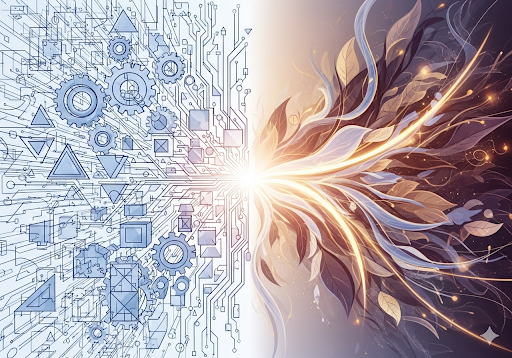
When you examine history’s most groundbreaking “firsts”—the people who created something genuinely unprecedented—you find the same pattern over and over. They weren’t purely analytical thinkers who ignored their intuition. They weren’t pure visionaries who dismissed practical concerns. They were Analytic Intuitives who refused to choose between different types of intelligence.
More importantly, their integration wasn’t accidental. It was necessary. Being “first” requires exactly the kind of sophisticated decision-making that most people struggle to develop.
The Integration Pattern Across Centuries
Let me show you what I mean by taking you inside the decision-making processes of four revolutionary creators, spanning different eras and fields. What you’ll see is the same Both/And framework that Murasaki used, applied to challenges that required unprecedented solutions.
Leonardo da Vinci: The First Renaissance Polymath
When Leonardo decided to dissect human corpses in 1489, he was making a decision that no artist had made before. Art was supposed to be about idealized beauty, not anatomical accuracy. Science was supposed to be theoretical, not hands-on investigation.
Leonardo integrated both approaches.
His Analytical Intelligence:
- Studied mathematical proportions and geometric principles
- Documented anatomical structures with scientific precision
- Applied engineering principles to understand how the body functioned as a machine
- Researched existing medical texts and artistic traditions
His Intuitive Intelligence:
- Sensed that true artistic mastery required understanding life from the inside
- Trusted his instinct that beauty emerged from truth, not convention
- Felt that knowledge gained through direct experience was more reliable than inherited assumptions
- Recognized patterns and connections that pure theory missed
The Integration Challenge: His analytical mind wanted comprehensive understanding. His intuitive mind wanted authentic expression. The conventional choice was one or the other.
His Integration Solution: Leonardo created a new category: the artist-scientist. He used analysis to inform intuition (anatomical knowledge made his figures more lifelike) and intuition to guide analysis (aesthetic sense helped him see which anatomical details mattered most).
The result? Innovations in both art and science that wouldn’t be matched for centuries.
Charles Darwin: The First Evolutionary Theorist
When Darwin returned from the Beagle voyage in 1836, he faced a decision that would consume the next 23 years of his life. His observations suggested something radical: species weren’t fixed, they evolved. But the implications were staggering—scientific, religious, social, and personal.
His Analytical Intelligence:
- Meticulously cataloged thousands of specimens and observations
- Studied Malthus, Lyell, and other theorists to understand population dynamics and geological time
- Designed experiments to test inheritance and variation patterns
- Calculated the mathematical probabilities of his observations occurring by chance
His Intuitive Intelligence:
- Sensed that the pattern he was seeing was fundamental to life itself
- Trusted his instinct that natural processes could explain complexity without requiring divine intervention
- Felt the timing for revolutionary ideas, waiting until the scientific community was ready
- Recognized which evidence would be most persuasive and which arguments would face the strongest resistance
The Integration Challenge: His analysis demanded that he publish immediately—the evidence was overwhelming. His intuition warned him about the social and professional consequences of premature revelation.
His Integration Solution: Darwin spent two decades building an unassailable analytical foundation while simultaneously developing intuitive understanding of how to present revolutionary ideas effectively. He used analysis to strengthen his case and intuition to time his revelation.
On the Origin of Species succeeded because it was both intellectually rigorous and strategically wise.
Mary Wollstonecraft: The First Feminist Philosopher
In 1792, Wollstonecraft faced an impossible decision: how to argue for women’s equality in a world that saw women as intellectually inferior by nature. Pure logical argument would be dismissed as unrealistic. Pure emotional appeal would be dismissed as irrational. She needed both.
Her Analytical Intelligence:
- Systematically dismantled philosophical arguments for women’s inferiority
- Used Enlightenment principles (reason, natural rights, social contract theory) to build her case
- Analyzed educational systems and social structures that limited women’s development
- Constructed logical frameworks showing how women’s supposed weaknesses were products of circumstance, not nature
Her Intuitive Intelligence:
- Recognized that abstract philosophical arguments needed concrete human examples
- Sensed which tone would engage rather than alienate potential allies
- Trusted her lived experience as evidence that contradicted prevailing theories
- Felt her way toward language that would make radical ideas accessible
The Integration Challenge: Analytical rigor alone would sound coldly theoretical. Intuitive passion alone would confirm stereotypes about women’s emotionalism.
Her Integration Solution: A Vindication of the Rights of Woman combined systematic logical argument with vivid examples, personal experience, and emotional appeal. She used analysis to establish credibility and intuition to create connection.
The result? The first comprehensive case for gender equality that was both intellectually serious and deeply human.
Steve Jobs: The First Personal Computer Visionary
In 1976, Jobs faced a choice that would define the tech industry. Computers were room-sized machines for experts. The conventional wisdom said consumers didn’t want or need personal computers. Jobs saw something different.
His Analytical Intelligence:
- Studied market trends and identified gaps in existing offerings
- Analyzed manufacturing costs and distribution challenges
- Researched user interface design and human-computer interaction
- Calculated market timing and competitive positioning strategies
His Intuitive Intelligence:
- Sensed that people would want technology that felt personal and intuitive
- Trusted his aesthetic instincts about what would create emotional connection
- Felt that the intersection of technology and liberal arts would create breakthrough products
- Recognized patterns in user behavior that market research missed
The Integration Challenge: Analysis suggested the market wasn’t ready. Intuition insisted it was.
His Integration Solution: Jobs used analytical intelligence to solve practical problems (manufacturing, distribution, pricing) while using intuitive intelligence to guide design philosophy and market timing. He didn’t choose between technical functionality and emotional appeal—he integrated both.
The result? Products that were both technically sophisticated and intuitively accessible, creating entirely new markets.
The Pattern That Creates “Firsts”
What these innovators share isn’t superior analytical ability or stronger intuition. It’s a natural integration that allows them to access multiple types of intelligence simultaneously.
They All Faced the Same Integration Challenge:
- Existing frameworks didn’t apply to unprecedented situations
- Pure analysis missed crucial human/contextual factors
- Pure intuition ignored practical constraints and risks
- Either/or thinking led to false choices that limited possibilities
They All Developed the Same Integration Solutions:
- Parallel processing that honored both analytical and intuitive input
- Situational awareness about when to lead with logic vs. feeling
- Protocols for resolving apparent conflicts between different types of intelligence
- Strategic patience that allowed time for comprehensive integration
They All Achieved the Same Integration Advantage:
- Decisions that were both innovative and implementable
- Solutions that worked both technically and humanly
- Timing that honored both logical readiness and intuitive opportunity
- Outcomes that satisfied both practical requirements and authentic vision
Why “Firsts” Require Integration
Here’s the insight that changed my understanding of innovation: Creating something genuinely unprecedented requires more than one type of intelligence because unprecedented situations can’t be solved with existing frameworks.
Pure Analysis gives you optimization within existing categories. It tells you how to do something better, faster, cheaper.
Pure Intuition gives you direction toward something different. It tells you what’s missing, what’s possible, what’s needed.
Integration gives you breakthrough innovation. It tells you how to create something that doesn’t exist by combining what is with what could be.
Every “first” in history represents someone who refused to accept the limitations of single-system thinking. They didn’t choose between logic and intuition—they orchestrated both to solve problems that couldn’t be solved any other way.
The Modern Implication
If you’re facing decisions that don’t fit existing templates—career pivots into fields that don’t quite exist yet, business solutions that combine previously separate elements, creative projects that integrate different disciplines, life choices that require both practical wisdom and authentic vision—you’re not indecisive.
You’re recognizing that complex, unprecedented situations require unique decision-making approaches.
The great innovators of history didn’t have formal frameworks for integration. They developed their approaches intuitively, through trial and error across decades.
You don’t have to reinvent their process. The patterns they discovered can be learned systematically.
The Framework They Used Intuitively
What Leonardo, Darwin, Wollstonecraft, Jobs, and Murasaki developed through necessity, you can learn through frameworks:
The Both/And Decision Process that honors multiple types of intelligence without forcing false choices
Integration Protocols for when analysis and intuition point in different directions
Situational Leadership that knows when to lead with logic, when to lead with feeling, and when to use full integration
Strategic Patience that allows time for comprehensive processing without falling into analysis paralysis
These aren’t generic decision-making tips. These are the specific approaches that history’s most innovative minds used to create unprecedented breakthroughs.
The Question for Modern Innovators
The pattern is clear: Throughout history, the people who created genuine “firsts” were Analytic Intuitives who refused to choose between different types of intelligence.
The question for you is this: Are you developing the same integrative abilities that allowed history’s greatest innovators to create unprecedented solutions?
Or are you allowing either/or culture to convince you that your natural complexity is confusion rather than the foundation for breakthrough thinking?
Every era needs its “firsts”—solutions to problems that existing frameworks can’t solve, innovations that integrate what exists with what’s possible.
Your integrative gifts aren’t a burden to overcome. They’re the exact capabilities that breakthrough innovation requires.
The frameworks exist. The patterns are learnable. The question is whether you’re ready to develop the same decision-making that allowed history’s greatest innovators to change the world.
What “first” will you create when you learn to orchestrate your analytical and intuitive intelligence as skillfully as they orchestrated theirs?
Ready to discover if you have the decision-making style that creates breakthrough innovation? Learn the systematic frameworks that transform natural integration into unprecedented results.