The comprehensive methodology that transformed impossible global challenges into solvable strategic problems
Published on consciouschoicemastery.com | Approx. 10-12 min read
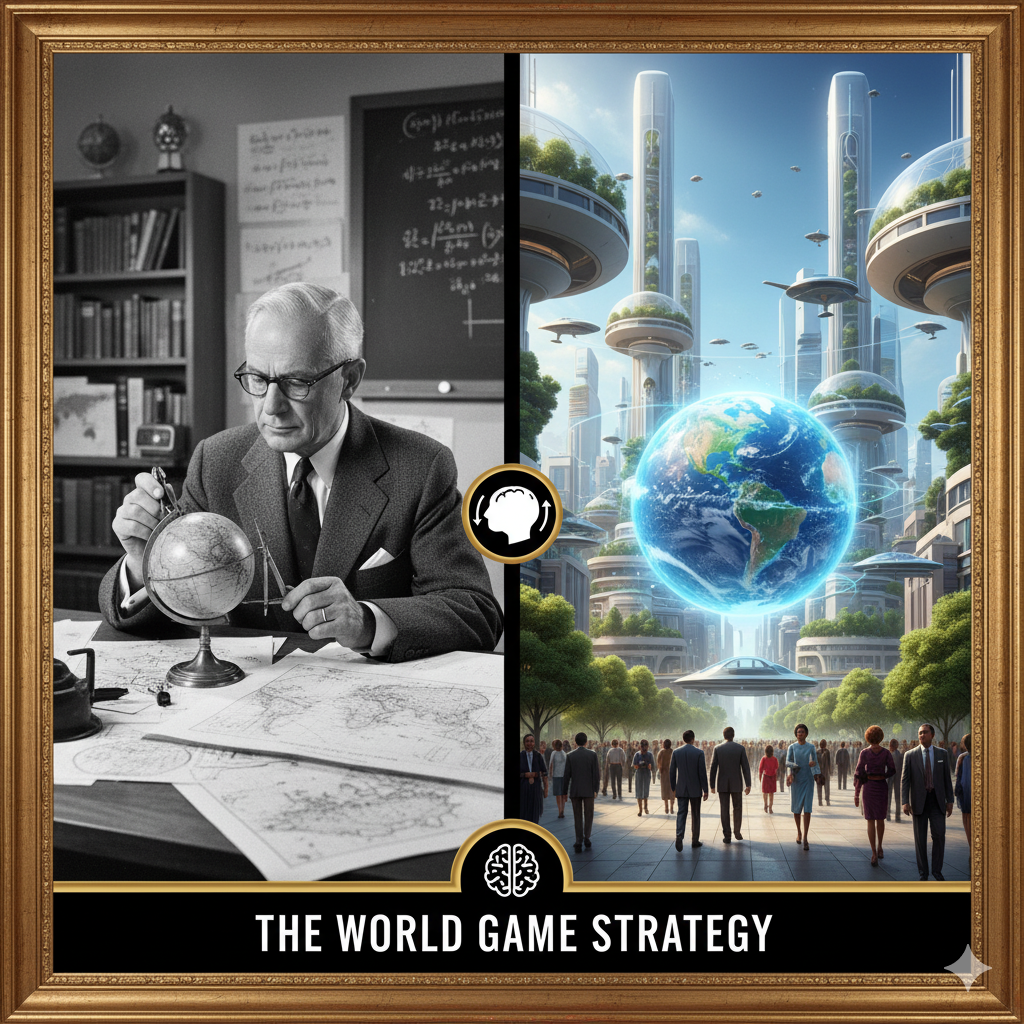
In 1961, Buckminster Fuller stood before a room of students at Southern Illinois University and made an audacious proposal. Instead of playing war games that modeled destruction, why not create a “World Game” that modeled how to make the entire world work for everyone?
“We are going to start with the universe and work down to the individual,” Fuller announced. “We’re going to take inventory of what we’ve got, and we’re going to make it work.”
What began as an educational experiment became one of the most sophisticated strategic analysis methodologies ever developed. Fuller’s World Game revealed systematic approaches to complex problem solving that remain revolutionary today, not because of their specific conclusions about global resources, but because of their comprehensive methodology for analyzing seemingly impossible challenges.
The World Game proved that most “unsolvable” problems become systematically manageable when approached with appropriate scope, accurate data, and comprehensive thinking. Fuller’s methods transformed global resource optimization from utopian fantasy into practical strategy, providing frameworks that work at any scale of complexity.
The Comprehensive Scope Strategy: Redefining Problems at Planetary Scale
Fuller’s first breakthrough was recognizing that most global problems couldn’t be solved locally. Poverty, environmental degradation, resource scarcity, and social instability were symptoms of planetary scale inefficiencies that required planetary scale solutions.
Traditional approaches analyzed problems in isolation, studying economics separate from ecology, examining technology independent of social systems, addressing symptoms instead of root causes. Fuller’s World Game methodology demanded comprehensive analysis of interconnected global systems operating simultaneously.
The scope expansion principle: Before accepting any problem definition, systematically analyze whether you’re addressing the challenge at the appropriate scale. Are you solving symptoms that will regenerate, or root causes that will eliminate multiple problems simultaneously?
Fuller applied this principle to resource scarcity, one of humanity’s supposedly eternal challenges. Instead of accepting scarcity as given, he systematically analyzed global resource flows, production capabilities, and distribution systems to determine whether scarcity was real or artificially created.
His comprehensive inventory revealed stunning inefficiencies:
- Resources sufficient for abundance: Earth possessed adequate raw materials to provide high quality life for all inhabitants
- Technology capable of universal prosperity: Existing production capabilities could eliminate poverty globally
- Distribution systems creating artificial scarcity: Resource allocation was optimized for profit rather than human welfare
- Information gaps preventing optimization: Decision makers lacked comprehensive data about global systems
The World Game demonstrated that “resource scarcity” was actually “resource misallocation”, a solvable strategic problem rather than an unchangeable natural law.
Modern application: When facing complex challenges, systematically examine whether you’re working at the right scale. Business problems might require industry wide analysis. Personal effectiveness challenges might need lifestyle system optimization. Team dysfunction might demand organizational culture transformation.
The Data Driven Reality Mapping: Systematic Information Architecture
Fuller’s World Game methodology required unprecedented data collection and analysis to create accurate models of global systems. His approach to information architecture provides frameworks for systematic analysis of any complex challenge.
Rather than relying on opinions, theories, or partial information, Fuller insisted on comprehensive data about actual conditions. The World Game used real numbers about population, resources, production capacity, energy flows, technological capabilities, and human needs.
The systematic inventory process involved:
Resource Assessment
- Raw material availability: Comprehensive cataloging of Earth’s mineral, agricultural, and energy resources
- Production capabilities: Detailed analysis of manufacturing, transportation, and processing capacity worldwide
- Human capabilities: Assessment of skills, knowledge, and creative potential across all populations
- Technological potential: Evaluation of existing and emerging technologies for resource optimization
Flow Analysis
- Resource movement tracking: Mapping how materials and energy moved through global systems
- Efficiency measurement: Calculating waste, redundancy, and optimization opportunities
- Bottleneck identification: Locating constraints that limited overall system performance
- Leverage point recognition: Finding strategic intervention points for maximum positive impact
Outcome Modeling
- Scenario development: Testing different resource allocation strategies through systematic simulation
- Consequence analysis: Predicting long term effects of various strategic choices
- Optimization calculation: Identifying approaches that maximized benefit for all participants
- Implementation strategy: Developing practical pathways for achieving optimal outcomes
Fuller’s data driven approach revealed that most global problems resulted from information gaps rather than actual impossibilities. When decision makers lacked comprehensive data about interconnected systems, they made locally rational choices that were globally destructive.
The information architecture principle: Systematic problem solving requires accurate data about current conditions, resource flows, constraint factors, and leverage points. Without comprehensive information, even brilliant strategy remains speculation.
Modern application: Before developing solutions, invest systematic effort in data collection and reality mapping. What are the actual numbers? Where are resources really flowing? What constraints are real versus assumed? What leverage points exist that aren’t obvious from surface analysis?
The Constraint Analysis Method: Systematic Identification of Real Limitations
One of Fuller’s most powerful World Game insights was distinguishing between real constraints and artificial limitations created by inadequate thinking or inefficient systems. His constraint analysis methodology reveals what’s actually preventing optimal outcomes versus what people assume is preventing them.
Fuller systematically categorized different types of limitations affecting global resource optimization:
Physical Constraints
- Actual resource availability: What materials and energy were physically accessible on Earth
- Thermodynamic limitations: Real energy conversion efficiencies based on natural laws
- Geographic factors: Transportation and distribution requirements based on physical distances
- Biological needs: Genuine human requirements for nutrition, shelter, health, and development
Technological Constraints
- Current capability boundaries: What existing technology could actually accomplish
- Development timeframes: Realistic estimates for advancing technological capabilities
- Implementation requirements: Resources needed to deploy solutions at scale
- Knowledge gaps: Areas requiring research and development for breakthrough solutions
Artificial Constraints
- Economic assumptions: Limitations created by financial systems rather than physical reality
- Political boundaries: Restrictions based on territorial divisions rather than functional optimization
- Cultural barriers: Limitations imposed by beliefs rather than actual impossibilities
- Information gaps: Problems created by inadequate data rather than real constraints
Fuller’s analysis revealed that most supposed “impossible” global challenges were actually caused by artificial constraints rather than physical limitations. The World Game demonstrated that Earth possessed sufficient resources and technological capability to provide abundance for everyone, if systems were organized for optimization rather than competition.
The constraint differentiation principle: Before accepting any limitation as permanent, systematically analyze whether it’s based on physical reality, technological capability, or artificial assumptions that could be changed.
His analysis of global energy systems provides a clear example. Traditional approaches assumed energy scarcity because they focused on finite fossil fuel reserves. Fuller’s comprehensive analysis included renewable energy potential, efficiency improvements, and systematic waste elimination. The result: Earth received more solar energy in one hour than humanity used in an entire year. “Energy scarcity” was revealed as a distribution and efficiency problem, not a supply problem.
Modern application: When facing seemingly impossible challenges, systematically separate real constraints from assumed limitations. What boundaries are based on natural laws versus artificial systems? Which limitations could be eliminated through better information, improved technology, or strategic reorganization?
The Leverage Point Discovery: Strategic Intervention for Maximum Impact
Fuller’s World Game methodology included systematic identification of strategic intervention points where relatively small changes could produce massive beneficial effects across entire systems. His leverage point analysis provides frameworks for strategic thinking at any scale.
Rather than trying to solve problems through direct force or massive resource allocation, Fuller looked for system points where minimal intervention would catalyze beneficial transformation throughout larger networks.
The World Game revealed several categories of high leverage interventions:
Education and Information Systems
- Comprehensive education access: Providing systematic learning opportunities could eliminate most social and economic problems within one generation
- Information distribution: Making accurate data about global systems available to decision makers would enable better strategic choices
- Technology transfer: Sharing efficient methods and tools could multiply productive capability exponentially
- Systems thinking education: Teaching people to understand interconnected systems would improve decision making at all levels
Infrastructure and Technology
- Communication networks: Connecting people globally would enable coordination and resource sharing
- Transportation optimization: Efficient movement systems would eliminate artificial scarcity and enable specialization
- Energy distribution: Systematic energy access would enable productive activities everywhere
- Production decentralization: Local manufacturing capability would reduce waste and increase resilience
Resource Allocation Systems
- Efficiency optimization: Eliminating waste in current systems would provide resources for universal abundance
- Distribution redesign: Organizing resource flows for need rather than profit would solve scarcity artificially
- Cooperation incentives: Aligning individual and collective interests would reduce conflict and increase productivity
- Long term planning: Making decisions based on comprehensive consequences rather than short term results
Fuller calculated that redirecting just 1% of global military spending toward comprehensive education and sustainable technology development could eliminate most global problems within 25 years. The leverage wasn’t in the money, it was in systematically addressing root causes rather than symptoms.
The leverage identification principle: Look for intervention points where small changes create beneficial cascade effects throughout larger systems. Focus on root causes that generate multiple symptoms rather than addressing each symptom separately.
Modern application: Before applying massive effort or resources, systematically analyze leverage points in your challenge domain. Where could small strategic changes produce disproportionately large improvements? What root causes generate multiple problems you’re trying to solve separately?
The Simulation and Modeling Strategy: Testing Solutions Before Implementation
Fuller’s World Game pioneered comprehensive systems modeling that allowed testing different strategies through simulation before implementing them in reality. His approach to scenario planning and outcome modeling provides methodologies for strategic decision making under uncertainty.
Rather than implementing solutions and hoping for the best, the World Game created detailed models of global systems that could simulate the consequences of different strategic choices. This systematic approach to testing revealed which approaches would actually work versus which seemed good in theory.
The World Game simulation methodology included:
Systems Modeling
- Component identification: Cataloging all relevant elements affecting global resource flows
- Relationship mapping: Understanding how different system components influenced each other
- Feedback loop analysis: Identifying how changes in one area would affect other areas over time
- Constraint modeling: Including real limitations that would affect implementation and outcomes
Scenario Development
- Alternative strategy generation: Creating multiple approaches to achieving optimal resource distribution
- Implementation pathway design: Developing realistic sequences for transitioning from current to optimal systems
- Obstacle anticipation: Identifying likely resistance and challenges for different approaches
- Adaptation planning: Building flexibility into strategies for unknown variables and changing conditions
Outcome Analysis
- Long term consequence calculation: Projecting effects of different choices over decades rather than years
- Unintended effect identification: Looking for secondary and tertiary consequences that weren’t immediately obvious
- Optimization measurement: Determining which approaches produced the best overall outcomes for all participants
- Learning integration: Using simulation results to improve both models and strategies continuously
The World Game simulations revealed that many supposedly “practical” approaches to global problems would actually make conditions worse over time, while approaches that seemed “unrealistic” would produce sustainable improvements for everyone.
For example, competitive approaches to resource allocation appeared efficient in short term simulations but created instability and waste over longer timeframes. Cooperative approaches seemed slower initially but produced better outcomes for all participants when analyzed comprehensively.
The simulation principle: Before implementing major strategic changes, systematically model likely outcomes across multiple timeframes and stakeholder groups. Test assumptions through scenario analysis rather than real world experimentation.
Modern application: Use systematic scenario planning for complex decisions. What would different approaches look like in 1 year, 5 years, 10 years? How would various stakeholders be affected? What unintended consequences might emerge? What would you learn that could improve your strategy?
The Collaboration Architecture: Systematic Coordination for Complex Challenges
Fuller’s World Game methodology required unprecedented coordination among diverse experts, institutions, and geographic regions. His systematic approach to collaboration architecture provides frameworks for organizing collective intelligence around complex challenges.
The World Game couldn’t be developed by individuals working in isolation. It required mathematicians, economists, ecologists, engineers, sociologists, and system theorists working together with accurate information and aligned objectives.
Fuller’s collaboration architecture involved:
Expertise Integration
- Comprehensive knowledge mapping: Identifying all relevant domains of expertise needed for systematic analysis
- Specialist coordination: Organizing experts to contribute their knowledge while understanding how it connected to other domains
- Translation systems: Creating communication methods that allowed specialists to understand each other’s contributions
- Synthesis protocols: Systematic methods for combining diverse expertise into coherent comprehensive understanding
Information Systems
- Data standardization: Ensuring all participants worked with compatible information formats and definitions
- Update mechanisms: Keeping all participants informed about new developments and discoveries
- Quality control: Maintaining accuracy and reliability of information throughout the collaborative network
- Access optimization: Making relevant information available to appropriate participants when needed
Decision Making Frameworks
- Objective alignment: Ensuring all participants shared commitment to comprehensive beneficial outcomes
- Process transparency: Making decision making methods visible and understandable to all contributors
- Conflict resolution: Systematic approaches for addressing disagreements about analysis or strategy
- Implementation coordination: Organizing collective action based on collaborative analysis and planning
Learning and Adaptation
- Feedback integration: Systematic methods for incorporating new information and experience into ongoing analysis
- Error correction: Processes for identifying and correcting mistakes without blame or defensive reactions
- Method improvement: Continuous refinement of collaborative processes based on what worked well or poorly
- Knowledge preservation: Documenting insights and methods so future collaborations could build on previous work
The World Game demonstrated that complex global challenges required collaboration architectures that could coordinate diverse expertise while maintaining systematic rigor and beneficial objectives.
The collaboration principle: Complex challenges require coordination of diverse expertise through systematic collaboration architectures that align objectives, integrate information, and enable collective decision making.
Modern application: When facing challenges that exceed individual expertise, systematically design collaboration approaches. What diverse knowledge domains are relevant? How will information be shared and decisions made? What processes will ensure alignment while utilizing different perspectives?
The Implementation Strategy: From Global Analysis to Practical Action
Fuller’s World Game methodology included systematic approaches for translating comprehensive analysis into practical implementation steps. His framework for moving from planetary scale understanding to specific actionable strategies provides models for implementing complex solutions.
The World Game wasn’t just theoretical analysis, it was designed to identify practical pathways for actually achieving global resource optimization. Fuller’s implementation methodology addressed the challenge of creating change in complex systems with multiple stakeholders and competing interests.
The systematic implementation framework involved:
Priority Sequencing
- Leverage point identification: Starting with interventions that would create beneficial cascade effects
- Resource requirement analysis: Understanding what capabilities and resources each implementation step would require
- Timeline optimization: Organizing implementation sequences for maximum efficiency and minimum resistance
- Dependency mapping: Identifying which changes needed to happen before others could be successful
Stakeholder Alignment
- Interest analysis: Understanding what different groups needed and wanted from global resource optimization
- Benefit demonstration: Showing how systematic optimization would serve everyone’s legitimate interests better than current approaches
- Resistance anticipation: Identifying likely opposition and developing strategies for addressing concerns constructively
- Coalition building: Creating alliances among groups that could benefit from comprehensive solutions
Pilot Project Strategy
- Proof of concept development: Creating small scale demonstrations that proved optimization principles worked in practice
- Success measurement: Establishing clear metrics for evaluating whether pilot projects achieved intended outcomes
- Learning integration: Using pilot project experience to improve understanding and refine implementation approaches
- Scaling methodology: Developing systematic methods for expanding successful pilot projects to larger scales
Adaptation and Refinement
- Feedback systems: Creating mechanisms for monitoring implementation results and identifying needed adjustments
- Course correction: Systematic approaches for modifying strategies based on actual experience rather than initial assumptions
- Unexpected opportunity integration: Methods for taking advantage of favorable developments that weren’t anticipated in original planning
- Resilience building: Designing implementation approaches that could continue functioning despite obstacles and setbacks
Fuller’s implementation methodology recognized that comprehensive solutions required systematic approaches to change management that considered political, economic, social, and technical realities simultaneously.
The implementation principle: Comprehensive analysis must be translated into systematic implementation strategies that consider stakeholder interests, resource requirements, sequencing dependencies, and adaptation mechanisms.
Modern application: When implementing complex solutions, systematically plan implementation sequences. What needs to happen first? Who needs to be involved? How will you measure progress and adapt to unexpected developments? What pilot projects could demonstrate feasibility?
The Learning System: Continuous Improvement Through Systematic Feedback
Fuller’s World Game included sophisticated feedback mechanisms for continuous learning and improvement. His approach to systematic learning from implementation experience provides methodologies for refining complex strategies over time.
The World Game wasn’t designed as a static solution but as a learning system that would continuously improve its understanding and effectiveness based on experience. Fuller recognized that complex systems required adaptive approaches that could evolve based on feedback rather than rigid plans that ignored new information.
The learning system methodology included:
Performance Monitoring
- Outcome measurement: Systematic tracking of whether interventions produced intended results
- Unintended effect detection: Monitoring for secondary and tertiary consequences that weren’t anticipated
- Efficiency analysis: Measuring whether resource allocation was achieving optimal results or could be improved
- Satisfaction assessment: Understanding how different stakeholders experienced the effects of implementation
Pattern Recognition
- Success factor identification: Analyzing what elements contributed to successful interventions
- Failure analysis: Understanding why some approaches didn’t work as expected without blame or defensiveness
- Replication potential: Identifying which successful approaches could be adapted to other situations
- Constraint evolution: Tracking how limitations and opportunities changed over time
Knowledge Integration
- Insight synthesis: Combining learning from different implementation experiences into improved understanding
- Method refinement: Continuously improving collaboration, analysis, and implementation approaches based on experience
- Theory updating: Modifying models and frameworks based on actual results rather than maintaining assumptions
- Wisdom development: Building deeper understanding of how complex systems work in practice rather than theory
System Evolution
- Adaptive capacity building: Developing ability to respond effectively to changing conditions and new challenges
- Resilience enhancement: Strengthening systems to handle disruptions without losing essential functionality
- Innovation integration: Incorporating new technologies and methods that could improve system performance
- Legacy planning: Ensuring that learning and capabilities would continue developing beyond current participants
Fuller’s learning system approach recognized that the World Game would need to evolve continuously as humanity’s understanding and capabilities developed.
The learning system principle: Complex implementations require systematic feedback mechanisms for continuous learning and adaptation rather than assuming initial plans will remain optimal indefinitely.
Modern application: Build learning mechanisms into complex projects. How will you monitor results? What feedback systems will detect needed adjustments? How will you capture and integrate lessons learned for future improvement?
Modern Strategic Applications: Adapting World Game Methodology
Fuller’s World Game methodology provides frameworks that apply to strategic challenges at any scale, from personal effectiveness optimization to organizational transformation to complex social problems. His systematic approach to comprehensive analysis translates directly to contemporary contexts.
Business and Organizational Strategy
Comprehensive scope analysis: Instead of optimizing departments separately, analyze how all organizational systems interact. How do marketing, production, finance, human resources, and innovation affect each other? What inefficiencies emerge from optimizing components rather than the whole system?
Resource flow mapping: Track how time, attention, information, and financial resources actually move through your organization. Where are bottlenecks creating artificial constraints? What leverage points could eliminate multiple problems simultaneously?
Stakeholder ecosystem modeling: Analyze all parties affected by organizational decisions, employees, customers, suppliers, communities, shareholders. How could strategies serve everyone’s legitimate interests rather than creating winners and losers?
Personal and Professional Development
Life system optimization: Instead of improving work, health, relationships, and personal growth separately, analyze how these domains affect each other. What changes in one area would create beneficial effects across all areas?
Constraint analysis: Systematically distinguish between real limitations and artificial assumptions. Which obstacles are based on actual impossibilities versus beliefs about what’s possible?
Leverage point identification: Look for strategic intervention points where small changes could produce large improvements. What skills, habits, or relationships could transform multiple aspects of your effectiveness?
Community and Social Innovation
Problem scale analysis: Before accepting local problem definitions, analyze whether challenges require broader scope solutions. Are you addressing symptoms that will regenerate, or root causes that could eliminate multiple problems?
Systems intervention design: Identify strategic points where community level changes could create beneficial effects across larger regions or populations. What local innovations could be replicated elsewhere?
Collaboration architecture: Design systematic cooperation among diverse stakeholders with different expertise and interests. How can various groups contribute their capabilities while working toward shared beneficial outcomes?
Complex Project Management
Comprehensive planning: Include all relevant factors affecting project success rather than optimizing single variables. How do technical requirements, resource constraints, stakeholder needs, and implementation realities interact?
Scenario modeling: Test different approaches through systematic analysis before implementation. What would various strategies look like over different timeframes? What unintended consequences might emerge?
Adaptive implementation: Build learning and adjustment mechanisms into project execution. How will you monitor progress and adapt to changing conditions without losing sight of overall objectives?
The Strategic Thinking Revolution: Why World Game Methodology Matters
Fuller’s World Game represents a fundamental shift in how humans can approach complex challenges, from fragmented problem solving to comprehensive systems optimization. His methodology demonstrates that systematic thinking can transform seemingly impossible challenges into manageable strategic problems.
The paradigm shift involves:
From Scarcity to Optimization
- Traditional thinking assumes limitations are permanent and solutions require sacrifice by some for others to benefit
- World Game methodology reveals that most apparent scarcity results from inefficient resource allocation rather than actual shortages
- Systematic optimization can often provide better outcomes for everyone rather than requiring zero sum tradeoffs
From Competition to Coordination
- Conventional approaches assume different groups must compete for limited resources and opportunities
- Comprehensive analysis often reveals that coordination serves everyone’s interests better than competition
- Strategic collaboration can create shared beneficial outcomes that exceed what any group could achieve separately
From Fragmentation to Integration
- Typical problem-solving addresses symptoms in isolation rather than understanding interconnected root causes
- Systems thinking approaches complex challenges as integrated wholes rather than collections of separate problems
- Comprehensive solutions can eliminate multiple issues simultaneously rather than solving each one individually
From Reaction to Design
- Most human responses to challenges involve reacting to problems after they develop rather than designing systems that prevent problems
- Strategic thinking can anticipate likely developments and create conditions for beneficial outcomes rather than waiting for crises
- Systematic design approaches can optimize for desired outcomes rather than hoping random efforts will succeed
The enduring relevance: Fuller’s World Game methodology remains revolutionary because it provides systematic frameworks for approaching any complex challenge with comprehensive thinking rather than fragmented problem solving.
Your World Game Challenge: Applying Systematic Analysis to Your Complex Challenge
Fuller’s World Game methodology provides a framework you can adapt for systematic analysis of any complex challenge you’re facing. His comprehensive approach can transform overwhelming problems into manageable strategic opportunities.
Week 1: Scope and Data Analysis
- Identify your complex challenge: Choose something that feels overwhelming or impossible, a career transition, organizational change, relationship challenge, creative project, or social issue you care about
- Expand the scope systematically: Ask whether you’re addressing the challenge at the appropriate scale. What larger system is this challenge part of? What would solving it at a broader scope reveal?
- Gather comprehensive data: Collect accurate information about current conditions, resource flows, constraints, and stakeholder interests rather than relying on assumptions
Week 2: Constraint and Leverage Analysis
- Distinguish real from artificial constraints: Systematically separate limitations based on natural laws from those based on assumptions, beliefs, or inefficient systems
- Map resource flows: Understand how time, attention, money, information, and other resources actually move through your challenge domain
- Identify leverage points: Look for strategic intervention points where small changes could produce disproportionately large beneficial effects
Week 3: Simulation and Planning
- Model different approaches: Use systematic scenario analysis to test various strategies before implementation
- Design collaboration architecture: Identify what expertise and resources you need, and how different stakeholders could contribute
- Plan implementation sequences: Organize strategic steps in optimal order considering dependencies, resources, and stakeholder readiness
Week 4: Implementation and Learning
- Start with pilot projects: Begin implementation with small scale experiments that provide learning opportunities
- Build feedback systems: Create mechanisms for monitoring progress and detecting needed adjustments
- Integrate lessons learned: Use experience to refine your approach and improve your systematic methodology
The World Game principle: Most challenges that seem impossible become systematically manageable when approached with appropriate scope, comprehensive data, strategic thinking, and adaptive implementation.
Buckminster Fuller’s World Game proved that systematic thinking could transform global challenges from impossible problems into practical strategic opportunities. His methodology remains among the most sophisticated frameworks for comprehensive analysis and strategic planning ever developed.
@ Lee Greene