Gilgamesh & Enkidu: Ancient Template for Conscious Self Partnership Development
Published on consciouschoicemastery.com | Approx. 12-14 min read
The Partnership That Changed Everything
Four thousand years ago, an unknown Sumerian storyteller created what may be humanity’s most complete guide to Conscious Self Partnership development. Hidden within the Epic of Gilgamesh lies a detailed exploration of how different parts of consciousness learn to work together rather than against each other.
The Gilgamesh-Enkidu relationship isn’t just ancient literature’s greatest friendship—it’s a practical map for how your ruling intelligence can develop conscious partnership with your natural wisdom, creating integrated capability far more powerful than either could achieve alone.
When we read this epic as consciousness development teaching, every stage reveals timeless principles for internal collaboration rather than internal conflict.
Stage 1: The Initial Opposition (Internal Conflict)
Gilgamesh: Unconscious Rulership
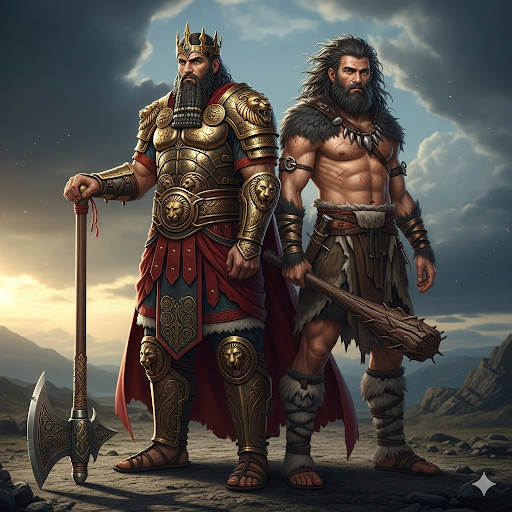
The epic opens with Gilgamesh as two-thirds divine, one-third human—extraordinary capability operating entirely unconsciously. He rules through dominance rather than partnership, treats his people as extensions of his will, and operates from pure unconscious power patterns.
Gilgamesh’s Unconscious Patterns:
- Immense natural intelligence and leadership capability
- Complete unconsciousness about impact on others
- Automatic patterns of control and domination
- No recognition that collaboration might be more effective than force
- Considerable abilities serving unconscious drives rather than conscious values
In development terms, this represents your ruling intelligence—the part that gets things done, makes decisions, and directs energy, but operates entirely on automatic patterns without conscious partnership.
Enkidu: Natural Wisdom
Enkidu emerges as pure natural intelligence—created by the gods to be Gilgamesh’s equal, living in harmony with animals and nature, possessing intuitive knowing without civilized conditioning.
Enkidu’s Natural Patterns:
- Direct connection to natural wisdom and intuitive knowing
- Authentic response patterns unconditioned by social expectations
- Immediate recognition of what serves life versus what harms it
- Powerful protective instincts activated by witnessing unconscious domination
- Pure authentic expression without strategic calculation
This represents your natural wisdom—your inner intelligence that knows what serves authentic development, recognizes when patterns harm rather than help, and responds from genuine knowing rather than conditioned reaction.
The Wrestling Match: Internal Struggle
When these two forces first encounter each other, they automatically oppose. Ruling intelligence sees natural wisdom as a threat to established control patterns. Natural wisdom sees unconscious ruling as destructive to authentic harmony.
Their legendary fight represents the internal conflict most people experience between different parts of consciousness. Your ruling intelligence wants to dominate natural wisdom. Your natural wisdom wants to overthrow unconscious control patterns.
This stage demonstrates Continuous Choice operating unconsciously—both parts are making choices about how to relate, but neither recognizes that cooperation might serve authentic development better than opposition.
Stage 2: The Recognition Shift (Choosing Alliance)
The Stalemate Understanding
When neither Gilgamesh nor Enkidu can overcome the other through force, both reach a crucial recognition: the part they’re fighting possesses essential intelligence they cannot access alone.
Gilgamesh’s Recognition: This natural intelligence possesses wisdom and authentic knowing that his ruling patterns completely lack. Without this wisdom, his considerable capabilities serve unconscious drives rather than conscious development.
Enkidu’s Recognition: This ruling intelligence possesses organizational capability and practical effectiveness essential for functioning in complex situations. Without these capacities, natural wisdom remains ineffective for creating actual change.
The Partnership Choice
This moment represents the fundamental choice between internal conflict and internal alliance. Both parts could continue trying to dominate each other, or they could explore conscious cooperation.
The Partnership Decision:
- Recognizing complementary rather than competing capabilities
- Choosing to experiment with collaboration instead of continuing opposition
- Trusting that conscious partnership might access intelligence neither part possesses alone
This demonstrates Adaptive Flexibility at the consciousness level—shifting from automatic opposition patterns to conscious cooperation exploration.
Stage 3: The Conscious Partnership Development (Integrated Operation)
Learning Collaborative Function
Once alliance is chosen, Gilgamesh and Enkidu begin developing actual conscious partnership skills. They learn how their different capabilities can work together rather than against each other for shared purposes.
The Humbaba Adventure: Collaborative Challenge-Facing
Their journey to fight the monster Humbaba demonstrates Conscious Self Partnership in action:
Shared Decision-Making: Both contribute to the choice-making process – Gilgamesh provides strategic planning, Enkidu provides authentic assessment of whether the challenge serves genuine development
Mutual Support System: When one becomes afraid or uncertain, the other provides encouragement and perspective – they develop Available Support through internal partnership
Complementary Capabilities: Gilgamesh’s courage and determination combine with Enkidu’s natural wisdom and protective instincts to create capability neither possessed alone
Conscious Courage Development: Together, they can face challenges that would overwhelm either individual part, demonstrating how partnership amplifies Inherent Capability
The Bull of Heaven: Partnership Under Pressure
Their second great adventure reveals how conscious partnership operates under extreme pressure. When divine forces send the Bull of Heaven to destroy them, their integrated response demonstrates mature Conscious Self Partnership:
Immediate Coordination: No need for lengthy discussion or negotiation – ruling intelligence and natural wisdom coordinate automatically for shared survival
Complementary Action: Each part contributes its unique strengths without competition or confusion about roles
Shared Responsibility: Both participate equally in both the challenge and the consequences that follow
This stage shows how conscious partnership, once developed, becomes natural and effortless rather than requiring constant negotiation.
Stage 4: The Integration Through Loss (Internalized Partnership)
The Death of External Partnership
Enkidu’s death represents the most crucial stage of consciousness development: learning to access partnership internally rather than depending on external relationship for integration.
The Grief Process as Consciousness Integration:
Gilgamesh’s profound grief demonstrates that conscious partnership, once experienced, becomes essential for effective functioning. He cannot return to unconscious ruling patterns because he’s experienced the intelligence and capability that emerges through conscious collaboration.
The Failed Search for Eternal Life:
Gilgamesh’s desperate quest for immortality represents the common mistake of trying to make external partnership permanent rather than learning to access integrated consciousness internally.
His Three-Level Guidance System throughout this journey shows the progression:
Level 1 – Inner Wisdom (Initially Missing): Without Enkidu, Gilgamesh has lost access to natural wisdom and authentic knowing. His ruling intelligence operates in isolation.
Level 2 – Life Experience (Misinterpreted): He interprets his experience with partnership as proof that he needs external relationship rather than internal integration.
Level 3 – Universal Principles (Received Through Teachers): Utnapishtim and other wise figures provide universal guidance about mortality, acceptance, and the true nature of lasting value.
The Integration Recognition
The epic’s conclusion shows Gilgamesh returning to his kingdom fundamentally transformed. He no longer rules through unconscious domination. He’s internalized the partnership – his ruling intelligence now operates in conscious collaboration with natural wisdom.
Evidence of Integration:
- Return to effective leadership without dominating others
- Recognition that true strength comes through partnership rather than control
- Acceptance of mortality and limitation as natural rather than enemies to overcome
- Ability to serve his people authentically rather than treating them as extensions of his will
This represents mature Conscious Self Partnership – ruling intelligence and natural wisdom operating as integrated consciousness rather than opposing forces.
Your Internal Enkidu Partnership
Recognizing Your Own Ruling Intelligence
Most people have a well-developed ruling intelligence—the part that organizes, decides, gets things done, and directs energy toward goals. But like early Gilgamesh, this part often operates unconsciously:
Unconscious Ruling Patterns:
- Making decisions based on shoulds, expectations, or automatic preferences rather than conscious choice
- Treating natural wisdom and intuitive knowing as obstacles to efficiency rather than essential guidance
- Operating from control patterns that create resistance in relationships and situations
- Using considerable capabilities to force outcomes rather than partner with natural flow
The Recognition: Your ruling intelligence isn’t the problem—unconscious operation is the problem.
Accessing Your Natural Wisdom
Everyone also possesses natural wisdom intelligence—the part that knows what serves authentic development, recognizes when patterns harm rather than help, and responds from genuine knowing rather than conditioned reaction.
Natural Wisdom Capabilities:
- Immediate recognition of what feels right versus what feels forced or inauthentic
- Body intelligence and energy awareness that provides information beyond mental analysis
- Protective instincts that activate when unconscious patterns threaten genuine wellbeing
- Creative knowing that emerges when ruling intelligence creates space for partnership
The Recognition: Your natural wisdom isn’t impractical or unreliable—it provides essential information that ruling intelligence cannot access alone.
The Partnership Development Process
Stage 1 – Opposition Recognition: Notice when your ruling intelligence and natural wisdom seem to conflict. Where does your get-things-done part push against your natural knowing? Where does your authentic wisdom resist your practical planning?
Stage 2 – Complementary Capability Recognition: Ask your Three-Level Guidance System: “How might these different types of intelligence work together rather than against each other?” Explore how ruling intelligence and natural wisdom might be complementary rather than competing.
Stage 3 – Conscious Partnership Experimentation: Begin making decisions through consultation between ruling intelligence and natural wisdom rather than letting one dominate the other. Practice Conscious Self Partnership by asking both parts for input before significant choices.
Stage 4 – Integrated Operation: Develop natural collaboration where ruling intelligence and natural wisdom coordinate automatically for conscious choice-making, challenging situations, and authentic development.
The Three-Level Guidance System Through Partnership
Level 1 – Inner Wisdom (Natural Wisdom Intelligence)
Your natural wisdom provides direct knowing about what serves authentic development, what feels right in specific situations, and what aligns with your genuine values rather than automatic preferences.
Partnership Questions: “Natural wisdom, what do you recognize about this situation? What feels authentic here? What serves genuine development rather than just immediate comfort or efficiency?”
Level 2 – Life Experience (Ruling Intelligence Database)
Your ruling intelligence maintains the database of accumulated experience, understanding of what approaches work effectively, and practical knowledge about how to implement choices in complex situations.
Partnership Questions: “Ruling intelligence, what has our experience taught us about this type of situation? What approaches have worked well for us? How can we implement authentic choices effectively?”
Level 3 – Universal Principles (Integrated Wisdom)
When ruling intelligence and natural wisdom operate in conscious partnership, they can access universal principles that serve both practical effectiveness and authentic development.
Partnership Questions: “How do our combined intelligences recognize universal principles operating here? What approach serves both authentic development and practical effectiveness?”
The Five Essential Life Principles Through Internal Partnership
Adaptive Flexibility: Multiple Intelligence Integration
Instead of rigid adherence to either practical efficiency or natural flow, conscious partnership allows adaptive integration based on what each situation actually needs.
Partnership Application: Some situations require more ruling intelligence (complex planning, difficult conversations), others require more natural wisdom (creative work, relationship decisions), most require conscious integration of both.
Continuous Choice: Partnership vs. Domination
Every moment offers the choice between internal partnership and internal domination. You can let ruling intelligence override natural wisdom, let natural wisdom reject practical considerations, or choose conscious collaboration.
Partnership Recognition: “I’m choosing how my different intelligences relate to each other. Cooperation or competition? Partnership or domination?”
Available Support: Internal and External Integration
Your ruling intelligence provides access to external resources, practical support, and implementation capability. Your natural wisdom provides access to inner knowing, authentic guidance, and alignment recognition.
Partnership Application: Conscious self partnership allows you to access both internal wisdom and external resources simultaneously rather than treating them as either/or choices.
Inherent Capability: Amplified Through Partnership
Your natural abilities become exponentially more powerful when different types of intelligence work together rather than against each other. Ruling intelligence alone lacks authentic direction. Natural wisdom alone lacks implementation power.
Partnership Recognition: “My capability includes both practical intelligence and natural wisdom. Together, they can handle challenges that would overwhelm either one alone.”
Conscious Self Partnership: The Meta-Principle
This principle IS the internal partnership development process—learning to treat different parts of your consciousness as collaborative allies rather than competing forces.
Partnership Practice: Regular internal consultation rather than automatic decision-making from whichever part feels strongest in the moment.
The Daily Partnership Practice
Morning Partnership Check-In (5 minutes)
Ruling Intelligence Questions: “What needs practical attention today? What goals and responsibilities require organized capability?”
Natural Wisdom Questions: “What feels authentic for today? What serves genuine development rather than just efficiency or external expectations?”
Partnership Integration: “How can both intelligences work together today? Where do I need more practical capability? Where do I need more natural wisdom?”
Decision-Point Partnership Protocol
Before Significant Choices:
- Pause: Create space for both ruling intelligence and natural wisdom to contribute
- Consult: Ask both parts for input rather than making decisions from automatic patterns
- Integrate: Find approaches that honor both practical effectiveness and authentic development
- Choose: Select from integrated intelligence rather than either/or thinking
- Act: Implement decisions with both practical capability and natural wisdom support
Evening Partnership Review
Partnership Assessment: “Where did ruling intelligence and natural wisdom work together well today? Where did one dominate the other? What did we learn about effective internal collaboration?”
The Recognition: You Are Both Intelligences
Beyond Internal Conflict
The Gilgamesh-Enkidu epic reveals that internal conflict between different types of intelligence is optional, not inevitable. You don’t need to choose between practical effectiveness and authentic wisdom—you can develop conscious partnership between them.
The Partnership Recognition: You don’t have a ruling intelligence and natural wisdom—you ARE the consciousness that can choose whether these intelligences work together or against each other.
Your Conscious Self Partnership isn’t about managing internal conflict—it’s about recognizing your natural capacity for internal collaboration and developing it systematically.
The Integration Understanding
Like Gilgamesh after Enkidu’s death, you’re learning to access partnership internally. The ruling intelligence that organized your life and the natural wisdom that knows what serves authentic development can work together as integrated consciousness rather than competing forces.
The Daily Partnership Choice: Will you operate from internal collaboration or internal domination? Will you consult both practical intelligence and natural wisdom before choices, or let automatic patterns decide?
The Enkidu Recognition: The partnership that creates your most effective and authentic choices isn’t something you need to find externally—it’s something you can develop internally through conscious collaboration between different types of intelligence you already possess.
The Living Practice: Partnership in Daily Choices
Beyond Self-Management
The Enkidu teaching reveals that conscious development isn’t about managing or controlling different parts of yourself—it’s about facilitating collaboration between different types of intelligence for conscious choice-making and authentic development.
Your Internal Partnership: When ruling intelligence and natural wisdom work together consciously, they create capability for handling complex situations while maintaining authentic development and genuine effectiveness.
This isn’t about balance or moderation—it’s about integration and amplified capability through conscious internal collaboration.
The Partnership Question: How might your practical intelligence and natural wisdom work together for this choice rather than compete for control?
The Enkidu friendship shows that your most powerful capability emerges not from perfecting individual intelligence, but from developing conscious partnership between the different types of intelligence you already possess.
Where in your life might ruling intelligence and natural wisdom be competing rather than collaborating? What choices could benefit from consultation between practical effectiveness and authentic knowing? How might conscious internal partnership change your approach to complex decisions?
@ 2025 Lee Greene