The Beatles’ secret to creative decision-making mastery: five principles for conscious choices that honor authenticity while serving collective good.
Published on consciouschoicemastery.com | Approx. 10-12 min read
The Beatles faced a choice in 1966 that would define not just their career, but the entire future of popular music. Continue the successful formula that had made them the world’s biggest band, or risk everything by following their creative instincts into completely uncharted territory.
They chose evolution over safety, creative authenticity over commercial certainty, and artistic growth over comfortable repetition. That choice gave us “Sgt. Pepper’s Lonely Hearts Club Band,” “The White Album,” and a body of work that continues influencing artists fifty years later.
What’s remarkable isn’t just that they made this risky creative decision—it’s how they made it. The Beatles demonstrated five essential principles of conscious choice-making that transformed not only their own artistic expression but showed millions of people what becomes possible when you trust your inner guidance over external expectations.
Their career evolution from Liverpool club band to experimental artists reveals a masterclass in conscious decision-making under enormous pressure. They navigated fame, creative differences, commercial expectations, and cultural responsibility while consistently choosing growth over comfort, authenticity over approval, and present-moment inspiration over past formula repetition.
Here’s what the Beatles knew about conscious choice-making that most people miss: revolutionary outcomes emerge not from revolutionary planning, but from revolutionary trust in your natural creative capability guided by conscious awareness of what wants to emerge through you.
The Beatles’ Five Principles of Creative Choice-Making
Principle 1: Adaptive Flexibility – “Every Song Requires Its Own Approach”
The Beatles never tried to force one musical approach onto every song. They adapted their methods, instruments, recording techniques, and even their personas to serve each creative vision. From the simple elegance of early ballads to the complex orchestration of later experimental work, they customized their approach to fit what each song wanted to become.
The Beatles’ Adaptive Flexibility in Action:
- Genre flexibility: Rock, ballads, Indian music, classical orchestration, electronic manipulation, children’s songs—whatever served the creative vision
- Recording innovation: Adapted studio techniques to match artistic vision rather than forcing artistic vision to fit recording limitations
- Role adaptation: Each member took lead on different songs based on natural fit rather than rigid hierarchy
- Cultural integration: Absorbed influences from Indian philosophy to avant-garde art without losing their essential Beatles identity
Modern Application: Like the Beatles, you can customize your approach to each relationship, career challenge, and life transition. The communication style that works in creative collaborations might need adaptation for business negotiations. The leadership approach that motivates artists won’t necessarily work with accountants. The parenting method that serves one child needs flexibility for another child’s unique personality.
Beatles Adaptive Flexibility Practice: Before any important decision, ask: “What approach serves this specific situation and these specific people?” rather than “What’s my usual method?”
Principle 2: Continuous Choice – “Each Album Is a New Beginning”
The Beatles never got trapped by their previous successes. Each album represented fresh choices about musical direction, creative partnerships, and artistic priorities. They consistently chose growth over repetition, even when repetition would have been more commercially safe and critically predictable.
The Beatles’ Continuous Choice in Action:
- Creative evolution: Each album explored new territory rather than repeating previous formulas
- Relationship dynamics: Adapted their collaborative process as they matured individually and collectively
- Commercial independence: Made artistic choices based on current inspiration rather than past commercial success patterns
- Learning integration: Used each album’s results to inform better creative choices in the next project
Modern Application: You can evolve your approach to any ongoing situation—career development, relationship dynamics, health practices, creative expression—based on what you’re learning and how you’re growing. If last year’s productivity system isn’t serving your current lifestyle, you can change it. If your communication patterns worked in early marriage but need updating for current circumstances, you can choose differently.
Beatles Continuous Choice Practice: When any current approach feels stale or limiting, ask: “What choice would honor who I’m becoming rather than who I used to be?”
Principle 3: Available Support – “Different Songs Need Different Contributors”
The Beatles mastered sophisticated use of available support while maintaining creative authority. They collaborated with producers, studio musicians, classical arrangers, and sound engineers, accessing expertise they didn’t possess personally while never surrendering artistic decision-making to external opinions.
The Beatles’ Available Support in Action:
- Producer collaboration: Worked with George Martin’s classical knowledge and studio expertise while maintaining creative vision
- Guest expertise: Used sitar players, orchestral musicians, and sound engineers to achieve artistic goals beyond their individual capabilities
- Peer learning: Absorbed influences from Bob Dylan, Indian musicians, electronic composers, and avant-garde artists
- Technical resources: Leveraged recording studio innovations and new instruments as creative collaborators
Modern Application: Support exists in multiple forms around you—colleagues with complementary skills, online communities with relevant experience, books by experts who’ve solved similar problems, mentors who’ve navigated similar challenges, even environmental resources and technological tools. Like the Beatles, you can access this support while maintaining decision-making independence.
Beatles Available Support Practice: Before feeling overwhelmed by any challenge, ask: “What expertise, resources, or assistance are available to me that could serve this situation?”
Principle 4: Inherent Capability – “Trust Your Musical Instincts”
The Beatles consistently trusted their natural musical instincts even when those instincts led them away from conventional pop music structures. They didn’t have formal training in orchestration, Indian music, or electronic composition, yet they confidently explored these territories through their inherent creative capability.
The Beatles’ Inherent Capability in Action:
- Melodic intuition: Trusted their natural sense for memorable melodies and harmonic progression
- Arrangement instincts: Knew instinctively how to arrange vocals, instruments, and studio effects for maximum emotional impact
- Creative risk assessment: Balanced experimental impulses with accessibility, trusting their ability to connect with audiences through authentic expression
- Collaborative chemistry: Trusted their natural creative partnership dynamics even when relationships became complex
Modern Application: You have natural capabilities that apply to unfamiliar territory. Your communication skills work in both professional presentations and personal conflicts. Your creative problem-solving applies to both technical challenges and relationship dynamics. Your leadership ability transfers from work situations to community involvement. Like the Beatles, you don’t need formal training before engaging with new opportunities—you can trust your existing capabilities and develop them through experience.
Beatles Inherent Capability Practice: When facing creative or professional challenges, ask: “What natural abilities do I have that apply here?” rather than “What formal training do I lack?”
Principle 5: Conscious Self Partnership – “Individual Expression Within Creative Unity”
The Beatles’ genius lay in maintaining individual authentic expression while creating unified artistic statements. Each member contributed their unique perspective and natural strengths to serve collective creative vision. Their internal creative dialogue—sometimes harmonious, sometimes conflicted—produced innovations that none could have achieved alone.
The Beatles’ Conscious Self Partnership in Action:
- Individual voice integration: Each member’s authentic musical personality contributed to collective sound rather than being suppressed for uniformity
- Creative dialogue: Internal band discussions, disagreements, and collaborations produced artistic breakthroughs
- Vision alignment: Balanced individual creative needs with collective artistic goals
- Authentic expression: Remained true to their evolving artistic values while adapting to changing cultural circumstances
Modern Application: Your conscious self—the part that’s aware of your thoughts, feelings, and circumstances—is your most sophisticated creative and decision-making partner. Like the Beatles, you can honor your individual authentic expression while contributing to family dynamics, workplace teams, and community involvement. You can maintain your unique perspective while collaborating effectively with others.
Beatles Conscious Self Partnership Practice: Before important creative or collaborative decisions, ask: “How can I contribute my authentic voice in a way that serves both my individual expression and our collective goals?”
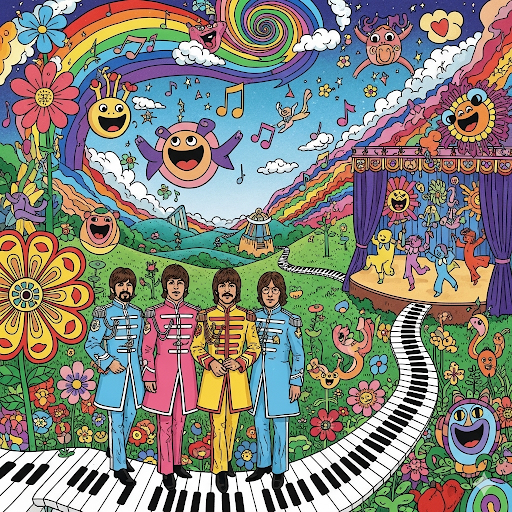
The Sgt. Pepper’s Transformation: From Formula to Freedom
The decision to create Sgt. Pepper’s represents the ultimate integration of all five principles under creative pressure:
The Creative Crisis: By 1966, the Beatles faced creative limitation. Their successful formula was becoming restrictive. External pressures demanded more of the same, while internal growth demanded artistic evolution.
The Transformation Choice: Rather than fighting between commercial safety and artistic risk, they created a third option: become a completely different band (Sgt. Pepper’s) that could explore any musical territory while maintaining Beatles core values.
Five Principles Integration:
- Adaptive Flexibility: Created new band identity to allow unlimited creative exploration
- Continuous Choice: Made fresh choices about sound, themes, and artistic approach for each song
- Available Support: Collaborated with George Martin, studio innovations, and diverse musical influences
- Inherent Capability: Trusted their natural musical instincts to guide experimental territory
- Conscious Self Partnership: Balanced individual creative needs with collective artistic vision
The Revolutionary Result: An album that changed music history by demonstrating what becomes possible when creative decisions emerge from conscious partnership with authentic inspiration rather than external expectations or past formula repetition.
The Beatles Method for Modern Creative Decision-Making
The “Abbey Road Studios Protocol” for Creative Challenges
When facing creative blocks or professional stagnation: Apply the Beatles’ experimental approach. Trust your natural creative instincts (Inherent Capability) while adapting methods to serve current inspiration rather than past successful formulas (Adaptive Flexibility). Access available creative resources, collaborators, and learning opportunities (Available Support). Make choices based on present creative energy rather than past patterns or future commercial concerns (Continuous Choice). Partner with your authentic creative vision while considering practical constraints (Conscious Self Partnership).
When navigating collaborative creative projects: Channel the Beatles’ collaborative sophistication. Honor each person’s authentic creative contribution (Inherent Capability) while adapting group dynamics to serve collective vision (Adaptive Flexibility). Access available expertise, perspectives, and resources from all collaborators (Available Support). Respond to present creative momentum rather than predetermined roles or past collaboration patterns (Continuous Choice). Balance individual expression with group creative goals (Conscious Self Partnership).
When making artistic or career evolution choices: Use the Beatles’ reinvention model. Trust your natural capability for growth and change (Inherent Capability) while adapting your methods and presentation to serve evolving vision (Adaptive Flexibility). Access available learning, mentoring, and development resources (Available Support). Choose based on current authentic interests rather than past identity investments or future security fears (Continuous Choice). Express your authentic evolution while honoring practical responsibilities (Conscious Self Partnership).
The “Help!” vs. “Let It Be” Philosophy
Two Beatles songs represent opposite approaches to handling overwhelming situations, demonstrating different applications of conscious choice-making:
The “Help!” Approach (Available Support + Continuous Choice): Recognizing when situations require external assistance and actively seeking appropriate help while maintaining decision-making authority. Used when facing genuinely challenging circumstances that exceed individual capacity.
The “Let It Be” Approach (Adaptive Flexibility + Conscious Self Partnership): Accepting what cannot be changed while remaining open to what wants to emerge naturally through present-moment awareness. Used when fighting circumstances wastes energy that could be directed toward creative response.
Integration Wisdom: Conscious choice-makers know when to seek help actively and when to trust present-moment awareness to reveal natural solutions. The Beatles demonstrated both approaches at different times in their career and personal lives.
Modern Application: You can develop similar discrimination between situations requiring active help-seeking and situations requiring patient present-moment awareness. Relationship conflicts might need direct communication and possibly counseling (Help! approach), while creative projects might need space for natural inspiration to emerge (Let It Be approach).
The White Album Wisdom: Individual Expression Within Unity
The Beatles’ later work reveals sophisticated understanding of how individual authentic expression can serve collective creativity rather than threatening it. Each member’s unique musical personality contributed to the whole without being suppressed for artificial uniformity.
The Individual Expression Principle:
- Authentic voice development: Each member explored personal musical interests that enhanced rather than competed with collective identity
- Creative responsibility: Individual creativity was exercised in service of artistic excellence rather than ego gratification
- Collaborative independence: Maintained personal artistic integrity while remaining committed to group creative goals
- Growth integration: Personal musical evolution was integrated into collective artistic development
Modern Collaborative Application: You can maintain your authentic perspective and unique strengths while contributing effectively to family dynamics, workplace teams, and community involvement. Your individual expression becomes more valuable to groups when it emerges from conscious self partnership rather than unconscious reaction or people-pleasing.
The Abbey Road Crossing: Choosing Your Path Forward
The iconic Abbey Road album cover shows four individuals walking in the same direction but in their own authentic styles—the perfect metaphor for conscious choice-making in relationship with others. Each Beatle maintains his individual expression while moving toward collective destination.
The Abbey Road Integration Method:
Individual Authentic Expression (Conscious Self Partnership): Walk your path in your natural style while remaining aligned with collective goals and values.
Collective Direction (Available Support): Choose destinations and directions that serve both individual growth and collective benefit.
Natural Timing (Continuous Choice): Each person moves at their natural pace while maintaining overall group coordination.
Environmental Harmony (Adaptive Flexibility): Work with current circumstances (the street, the traffic, the photographer) rather than demanding perfect conditions.
Capability Trust (Inherent Capability): Each person trusts their ability to walk their own path while contributing to collective success.
Modern Abbey Road Application: You can approach family decisions, workplace projects, and community involvement with similar integration—maintaining your authentic voice while serving collective goals, contributing your unique strengths while supporting others’ contributions, choosing your individual responses while remaining aligned with shared values.
The “Here Comes the Sun” Moment: Present-Moment Awareness
One of the Beatles’ most hopeful songs demonstrates present-moment awareness cutting through difficult circumstances. Rather than analyzing why difficulties exist or planning how to prevent future problems, the song focuses on recognizing what’s emerging naturally through present awareness.
The Present-Moment Choice Philosophy:
- Current reality acceptance: Working with what’s actually happening rather than what you wish were happening
- Natural emergence trust: Allowing solutions and opportunities to appear through present-moment awareness rather than forced planning
- Optimism grounded in observation: Hope based on actual evidence of positive change rather than wishful thinking
- Timing wisdom: Recognizing when to act and when to allow natural timing to unfold
Modern “Here Comes the Sun” Application: When facing challenging circumstances—work stress, relationship difficulties, health concerns, financial pressure—you can apply present-moment awareness to recognize support, opportunities, and positive developments that anxiety and overthinking often obscure.
The Beatles Decision-Making Legacy
The Beatles’ most important legacy isn’t their specific musical innovations—it’s their demonstration that ordinary people can make extraordinary choices by trusting their natural creativity, adapting to changing circumstances, accessing available support and resources, choosing growth over comfort repeatedly, and maintaining authentic expression while serving larger purposes.
Their Choice-Making Pattern:
- Trust natural creative instincts even when they lead away from proven formulas
- Adapt methods and approaches to serve current inspiration rather than past successes
- Access available expertise and resources while maintaining creative authority
- Choose growth and evolution repeatedly despite commercial and social pressure for consistency
- Partner authentic individual expression with collective creative goals
Modern Legacy Application: You can apply the same pattern to your career development, relationship evolution, creative expression, and personal growth. The specific circumstances will be different, but the choice-making principles that guided their revolutionary transformation are available for your own life revolutions.
Your Personal “Sgt. Pepper’s Moment”
Every person faces moments when continuing current patterns feels limiting but changing feels risky. These are your “Sgt. Pepper’s moments”—opportunities to trust your evolving authentic expression over external expectations for consistency.
Recognizing Your Transformation Moments:
- Creative stagnation: Current approaches feel routine rather than inspiring
- External pressure for consistency: Others want you to keep doing what’s worked before
- Internal growth tension: Your authentic interests and capabilities are evolving beyond current expressions
- Risk-reward evaluation: Safety feels limiting while growth feels uncertain but energizing
The Beatles Choice Framework for Personal Evolution:
Step 1: Acknowledge Evolution (Conscious Self Partnership) Notice where your authentic interests and capabilities have grown beyond current expressions. What wants to emerge through your natural development?
Step 2: Assess Available Resources (Available Support) What support, expertise, and opportunities are accessible for exploring new directions? Include both internal resources (past experience, natural abilities) and external resources (mentors, learning opportunities, collaborative possibilities).
Step 3: Design Flexible Experimentation (Adaptive Flexibility) Create ways to explore new directions without abandoning all security. How can you test new approaches while maintaining necessary stability?
Step 4: Trust Natural Capability (Inherent Capability) Recognize that your creative and professional abilities transfer to new territory. What evidence exists of your natural capability to learn, adapt, and succeed in unfamiliar situations?
Step 5: Choose Authentic Growth (Continuous Choice) Make choices based on present authentic inspiration rather than past identity investments or future security fears. What choice honors both your growth and your practical responsibilities?
The “Yesterday” and “Tomorrow Never Knows” Integration
The Beatles catalog demonstrates the full spectrum of time-awareness in decision-making, from nostalgic attachment to present-moment consciousness:
“Yesterday” Consciousness (Mental Time Travel): Making choices based on past patterns, relationships, or identities that may no longer serve current reality. Nostalgia for “simpler times” that prevents engagement with present opportunities and challenges.
“Tomorrow Never Knows” Consciousness (Present-Moment Awareness): Making choices from present-moment awareness of what’s actually happening and what wants to emerge. Trust in natural wisdom and capability to handle uncertainty without needing to predict or control future outcomes.
The Integration Balance: Conscious choice-makers honor valuable lessons from past experience while remaining open to present-moment inspiration and guidance. They learn from yesterday while choosing from today’s awareness and possibilities.
Modern Integration Application: You can appreciate your past experiences and achievements while making choices based on current reality and authentic present-moment guidance. Past patterns inform your choices without controlling them.
The “Revolution” Choice: When to Change and When to Accept
The Beatles’ exploration of social and political themes reveals sophisticated understanding of when change serves growth and when acceptance serves wisdom. Their approach to revolution—both personal and cultural—demonstrates conscious choice-making about when to challenge existing systems and when to work within them.
The Conscious Revolution Framework:
- Internal revolution first: Transform your own choice-making patterns before trying to change external circumstances
- Evolution over destruction: Choose growth and development over reactive rebellion
- Authentic expression: Revolutionary choices emerge from natural capability and wisdom rather than anger or dissatisfaction alone
- Service integration: Personal transformation in service of collective benefit rather than individual ego gratification
Modern Revolutionary Application: You can apply this framework to any situation where you’re considering significant change—career transitions, relationship evolution, lifestyle modifications, creative expression changes. Choose transformation that serves both your authentic growth and your genuine contribution to others.
Your Abbey Road Studios: Where Creation Happens
The Beatles’ legendary recording sessions reveal how conscious choice-making creates space for creativity, innovation, and authentic expression to emerge naturally. Abbey Road Studios became sacred space where individual inspiration met collective vision through conscious collaboration.
Creating Your Creative Decision-Making Space:
- Present-moment awareness: Regular time for connecting with current authentic inspiration rather than past formulas or future plans
- Collaborative openness: Willingness to access available support and expertise while maintaining creative authority
- Experimental safety: Permission to try new approaches without requiring guaranteed success
- Values anchor: Clear connection to what truly matters to you that guides choices through uncertainty
- Natural capability trust: Confidence in your ability to create, adapt, and contribute authentically
Your Daily Abbey Road Sessions: Every important decision can become an Abbey Road moment—space for conscious collaboration between your analytical mind, intuitive wisdom, practical knowledge, emotional intelligence, and authentic creative vision to produce choices that serve both your individual growth and your contribution to others.
The “Come Together” Integration: All Principles Working Harmoniously
The Beatles’ later work demonstrates what becomes possible when all five principles operate together naturally: individual authentic expression, flexible adaptation to changing circumstances, sophisticated use of available resources, trust in natural creative capability, and conscious partnership with evolving inspiration.
The Integration Promise: When you consistently apply all five principles to your decision-making, your choices begin to feel like Beatles songs—individually authentic yet universally resonant, creatively innovative yet emotionally accessible, personally meaningful yet broadly influential.
Your life becomes your “Sgt. Pepper’s”—a creative statement that serves both your individual authentic expression and your positive contribution to the world around you. Every choice becomes an opportunity to demonstrate what’s possible when natural capability meets conscious awareness guided by authentic values.
Your Beatles Legacy: Right now, you’re creating the soundtrack to your life through the choices you make. What wants to emerge through your natural creative capability that you’ve been hesitating to express? What authentic evolution is ready for your conscious choice-making support?
Like the Beatles stepping into Abbey Road Studios with new songs and open awareness, you can step into your next important choice with creative confidence—not because you know exactly what will emerge, but because you trust your natural capability to create something meaningful through conscious partnership with what wants to be born through your authentic expression.
The revolutionary outcome isn’t guaranteed, but the revolutionary process—trusting your inner guidance over external expectations—is available in every choice you face.
What’s your personal “Sgt. Pepper’s”—the creative choice that requires trusting your evolving authentic expression? Your conscious self has been composing the song of your next evolution. The studio is ready, and all you need to do is trust your natural capability to create something beautiful.
@ 2025 Lee Greene