Structure. Understanding. Method. Together, they form ISM, the integrated framework philosophy that has sought for 2,400 years.
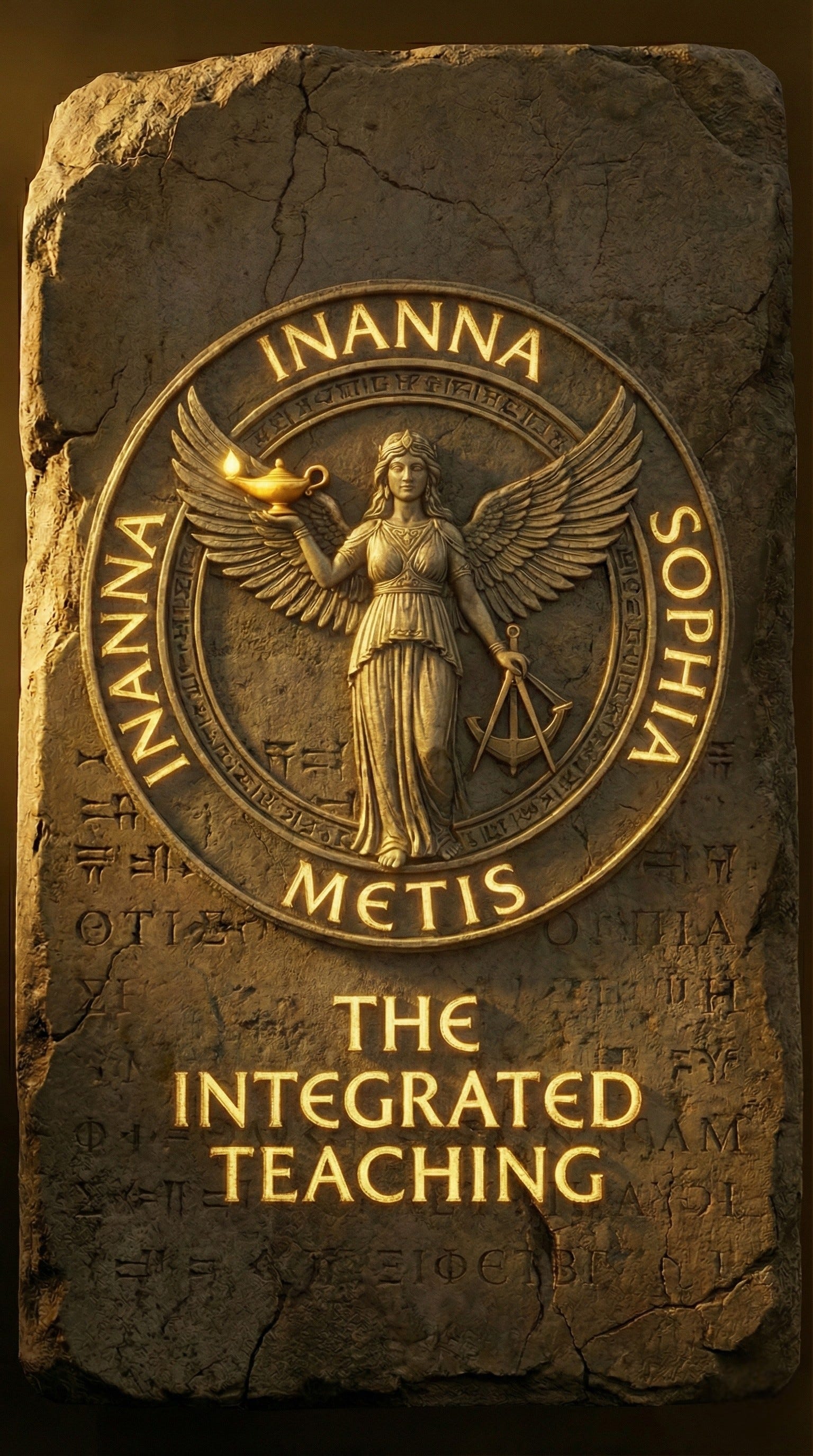
Three goddesses. Three traditions. Three thousand years separating their worship. Yet they encode one complete teaching. Structurally, each providing what the others cannot, each essential to wholeness, each suppressed by the same patriarchal forces that fragmented Western wisdom.
Structure. Understanding. Method. Together, they form ISM, the integrated framework philosophy that has sought for 2,400 years.
Western philosophy has been trying to answer fundamental questions for millennia:
- How does transformation happen?
- What is the relationship between formless and form?
- How do we navigate change consciously rather than reactively?
- What is the structure underlying all growth, all evolution, all becoming?
The answers existed. Encoded in three goddesses from three different traditions, separated by geography and time but united by pattern. Then the patriarchy intervened.
Not through single coordinated suppression, but through systematic preference for masculine modes of knowing; abstract over embodied, transcendent over immanent, conceptual over experiential. The goddesses were fragmented, buried, or branded heretical.
Inanna’s myth survived, barely, on cuneiform tablets buried in Mesopotamian ruins, untranslated until the early 20th century. Sophia was excluded from Biblical canon, her texts buried in Egyptian deserts, her wisdom branded as Gnostic heresy. Metis was literally swallowed, consumed by Zeus in mythology, minimized in philosophy, her cunning intelligence suppressed as threatening to patriarchal order. Three goddesses. Three suppressions. One pattern is lost. Until now.
Inanna: The Structure and Who She Was
Inanna, Queen of Heaven and Earth. Sumerian goddess worshipped from approximately 4000 BCE. Not a minor deity or local spirit, but the central divine figure of the world’s first civilization, the culture that invented writing, cities, agriculture, and recorded history itself. Her most important myth: The Descent to the Underworld.
Inanna embodies the pattern itself, the architectural blueprint underlying all transformation. Structurally. Her descent follows precise architecture: seven gates down, each requiring sacrifice of power and identity. Her crown was removed. Her measuring rod surrendered. Gold ring relinquished. Breastplate stripped. Every gate demands more, stripping form to approach formless, power to powerlessness, identity to dissolution. At the seventh gate, she stands naked. Ereshkigal, her dark sister, kills her and hangs her corpse on a hook.
Three days dead. Complete dissolution. Utter formlessness. The nadir, maximum entropy, no structure, no identity, no form. Then resurrection. Water of life applied. Inanna rises. Seven gates ascending. Each power reclaimed. Each aspect of her identity is restored. Formless becoming form again. But transformed, what ascends is not identical to what descended. The pattern changed her.
7-3-7. Descent, death, ascent. Form to formless. Formless to form. The complete cycle.
This is STRUCTURE, not content about structure, but structure itself made visible through narrative.
Why Structure Matters
Every transformation you’ve experienced follows this pattern, whether you recognize it or not:
- Learning a skill: Descent into not-knowing (incompetence recognized) → Death of old identity (”I’m not good at this”) → Ascent into competence (new capability embodied)
- Ending a relationship: Descent through grief (identity as partner stripped) → Death of relationship (complete dissolution of bond) → Ascent into new identity (single self reconstituted)
- Career change: Descent into uncertainty (old role released) → Death of professional identity (who am I without this job?) → Ascent into new career (new professional self built)
- Spiritual awakening: Descent through dark night (beliefs stripped) → Death of ego (complete dissolution of self-concept) → Ascent into new consciousness (transformed understanding embodied)
The pattern is universal. Inanna made it visible. But pattern alone, structure without understanding or method, leaves you unconscious of what’s happening. You live the descent without knowing you’re descending. You experience death without recognizing its necessity. You ascend without understanding the transformation. Structure alone is incomplete.
Sophia: The Understanding and Who She Was
Sophia, whose name literally means “wisdom” in Greek. Divine feminine wisdom in Gnostic Christianity, Jewish mysticism, and esoteric traditions from roughly 200 BCE onward. Not a goddess of knowledge (information) but of wisdom, the direct knowing that sees truth beneath appearances, that comprehends meaning beyond facts, that understands significance rather than merely accumulating data. In Gnostic texts, Sophia is divine wisdom that “fell” from the pleroma (fullness) into matter, creating the material world through her descent. Her return, the ascent from matter back to spirit, is humanity’s path. She is both the pattern (her descent/ascent) and the knowing that sees the pattern.
Sophia embodies UNDERSTANDING, not intellectual comprehension, but wise knowing.
What is the difference? Knowledge says that “Inanna descended through seven gates.” Understanding sees that “This is my descent. I am at the fourth gate. I recognize what’s being asked of me. I see why this stripping is necessary. I comprehend the transformation occurring.” Knowledge accumulates information externally. Understanding recognizes truth internally.
Sophia is the wisdom that sees. Not thinks about, but directly perceives. Not believes, but knows. Not conceptualizes, but recognizes. She is gnosis, direct knowing, as opposed to pistis (faith) or episteme (knowledge). The knowing that needs no mediator, no priest, no external authority. Direct recognition of truth. This is why orthodoxy branded Sophia heretical.
Direct knowing threatens institutional authority. If wisdom is accessible directly, if Sophia can be encountered without a priest or church, then hierarchy becomes unnecessary. Gnostic Christianity centered on direct experience of divine wisdom (Sophia) rather than mediated access through clergy. The orthodox church responded by excluding Gnostic texts from Biblical canon, burying Sophia’s wisdom in desert sands (literally, Nag Hammadi texts discovered 1945), and branding direct knowing as dangerous heresy. But Sophia survived. In hidden texts. In mystical traditions. In the knowing available to anyone who looks directly.
Structure without understanding is blind pattern.
You could live Inanna’s descent unconsciously, experiencing stripping, death, and ascent, without ever understanding what’s happening. Many people do. They suffer transformations without comprehending them, experience growth without recognizing the pattern, endure dark nights without seeing their necessity.
Sophia provides the understanding that transforms unconscious suffering into conscious transformation:
- Recognition: “I’m in descent. This stripping is the pattern working.”
- Meaning: “The loss serves transformation. Death precedes resurrection.”
- Significance: “This pain has purpose. The void is necessary. What’s being dissolved must dissolve for what’s emerging to emerge.”
Understanding doesn’t remove the difficulty, descent still strips, death still dissolves, but it changes your relationship to the process. You stop resisting what must happen. You recognize the intelligence of the pattern. You see the wisdom in what appears as destruction. But understanding alone, wisdom without structure or method, remains abstract.
You might understand transformation conceptually without recognizing the specific structure (Inanna’s 7-3-7) or possessing the method to navigate consciously (Metis’s cunning). Understanding floating free of structure and method becomes philosophical abstraction rather than lived wisdom. Understanding alone is incomplete.
Metis: The Method and Who She Was
Metis, first wife of Zeus. Greek goddess of cunning intelligence, strategic wisdom, and practical cleverness. Her name derives from the Greek root meaning “wisdom,” “skill,” “craft”, but specifically practical wisdom, not abstract knowledge. Metis is mētis, cunning intelligence that navigates complexity, strategic thinking that finds paths through obstacles, the wisdom that knows not just what is true but how to act effectively. Zeus pursued her. She transformed repeatedly to escape, shapeshifting through forms to evade capture. Eventually he caught her. They married. She became pregnant.
Then the prophecy: Her son would overthrow Zeus. Zeus’s response? He swallowed her. Consume her entirely. Prevent her wisdom from manifesting. The myth says Zeus gained her cunning by swallowing her, her intelligence became his. Athena, goddess of wisdom, was born from Zeus’s head (not Metis’s womb), suggesting masculine appropriation of feminine wisdom. But Metis herself? Consumed. Disappeared. Her method was suppressed.
Metis embodies method, the strategic intelligence required to navigate transformation consciously rather than reactively. Cunning here doesn’t mean deceptive. It means skillful, the capacity to find paths through complexity, to adapt strategies to circumstances, to navigate wisely rather than rigidly. Consider her shapeshifting when Zeus pursued her. She didn’t fight directly (would lose). She didn’t flee linearly (would be caught). Instead, she transformed, changed form to suit circumstances, adapted strategy to context, navigated through cunning rather than force. This is method. The practical intelligence that knows not just what (structure) or why (understanding) but how:
- How to recognize which gate you’re at in descent
- How to choose consciously when pattern demands sacrifice
- How to navigate death phase without escaping prematurely
- How to integrate ascent without spiritual bypassing
- How to apply wisdom strategically rather than abstractly
Method is embodied wisdom, not floating understanding, but grounded practice. Not knowing about transformation, but knowing how to transform. Structure and understanding without method leave you passive. You recognize the pattern (Inanna’s structure). You understand its meaning (Sophia’s wisdom). But you don’t know how to navigate it consciously. You’re subject to the pattern rather than participant in it. Reactive rather than responsive. Victim of transformation rather than conscious agent.
Metis provides the method that transforms understanding into agency:
- Strategic recognition: Knowing when to descend (voluntary before forced)
- Cunning choice: Knowing how to sacrifice (what to release, what to keep)
- Skillful integration: Knowing how to embody (practice, not just concept)
- Adaptive navigation: Knowing how to adjust (respond to circumstances)
Zeus swallowed Metis because her cunning threatened his power. Feminine strategic intelligence, practical wisdom that navigates complexity through adaptation rather than force, undermines rigid patriarchal authority that maintains control through inflexible hierarchy. Metis’s suppression wasn’t accidental. It was structural. Patriarchy cannot tolerate the method that would enable conscious navigation of its own dissolution. But method alone, strategy without structure or understanding, becomes manipulation. Cunning divorced from wise structure becomes mere cleverness, potentially harmful. Strategy without understanding deeper patterns serves ego rather than transformation. Method needs structure and understanding to serve wisdom rather than mere effectiveness. Method alone is incomplete.
The Integration: Why Three, Not One
Each goddess alone is incomplete.
- Inanna without Sophia or Metis? You have the pattern but don’t understand it and can’t navigate it consciously. You suffer transformations unconsciously, subject to forces you don’t comprehend.
- Sophia without Inanna or Metis? You have understanding but no structure to apply it to and no method to embody it. Wisdom remains abstract, philosophical, disembodied.
- Metis without Inanna or Sophia? You have method but no pattern to navigate and no wisdom to guide it. Strategy becomes manipulation, cunning serves ego, effectiveness replaces depth.
But all three together?
- Structure (Inanna): The pattern itself, 7-3-7, formless ↔ form, the architecture of transformation
- Understanding (Sophia): The wisdom, direct knowing of what the pattern means, why it matters, how it serves
- Method (Metis): The strategy, practical intelligence for navigating the pattern consciously, skillfully, effectively
Together, they form a complete teaching:
- You recognize the pattern you’re in (Inanna’s structure becomes visible)
- You understand what’s happening (Sophia’s wisdom provides meaning)
- You navigate strategically (Metis’s method enables conscious participation)
This is ISM, Inanna Sophia Metis, the integrated framework. Not one goddess trying to do everything, but three goddesses each contributing essential functions, together forming wholeness that none alone achieves.
Why Does Philosophy Need This?
Western philosophy has been incomplete for 2,400 years. Not because philosophers were stupid, they weren’t. Not because they didn’t seek truth, they did. But because they inherited a fragmented tradition. Plato had Sophia (understanding, wisdom, direct knowing of Forms) but lacked full structure and method. His ascent toward formless Forms captured half of Inanna’s pattern, the upward movement, form to formless, but missed the necessity of descent, death, and return to form. Aristotle had partial structure (potential actualizing into form) and method (systematic observation) but lacked Sophia’s direct wisdom. His descent into matter and form captured the other half of Inanna’s pattern, formless to form, but missed the ascent back to formless. Neither had Metis’s full method, the cunning that knows how to navigate the complete cycle consciously.
Together, Plato and Aristotle fragmentarily preserved what Inanna taught whole. The bidirectional movement between formless and form, the complete cycle of descent and ascent. But they couldn’t integrate what they’d fragmented. They became opposed schools, Idealism versus Materialism, transcendence versus immanence, Forms versus matter, when they should have been recognized as complementary halves of one pattern. Philosophy has spent two millennia trying to reconcile them.
ISM provides the reconciliation:
- Inanna’s structure shows both directions are necessary (descent AND ascent, formless ↔ form)
- Sophia’s understanding reveals why both matter (wisdom sees wholeness, not opposition)
- Metis’s method demonstrates how to navigate both (strategic movement through complete cycle)
Plato and Aristotle aren’t opposed. They’re fragments of Inanna’s complete pattern, lacking Sophia’s integrating wisdom and Metis’s navigating method. ISM recovers what philosophy lost.
The Pattern of Suppression
Notice the consistency:
- Inanna: Sumerian goddess, 4000 BCE. Her myth buried in ruins. Cuneiform tablets untranslated until 1900s. Pattern invisible to West for millennia.
- Sophia: Gnostic divine wisdom, 200 BCE – 200 CE. Her texts excluded from Biblical canon. Branded heretical. Buried in desert. Not discovered until 1945. Wisdom suppressed for 1700 years.
- Metis: Greek goddess, ~800 BCE. Swallowed by Zeus in myth. Minimized in philosophy. Her cunning intelligence is absorbed by patriarchy. Method appropriated, source erased.
Three goddesses. Three suppressions. One pattern. Feminine wisdom systematically buried, fragmented, or consumed. Structural preference.
Patriarchy, whether Greek, Roman, Christian, or secular, operates through:
- Hierarchy (rigid structure) over cyclical patterns (Inanna’s descent/ascent)
- Abstract knowing (intellectual) over direct knowing (Sophia’s gnosis)
- Force (domination) over cunning (Metis’s strategic intelligence)
The goddesses threatened this order:
- Inanna teaches cyclical transformation (undermines rigid hierarchy)
- Sophia teaches direct knowing (undermines mediating authorities)
- Metis teaches strategic cunning (undermines dominating force)
So they were suppressed. Buried. Swallowed. Fragmented. But the structure cannot be destroyed, only hidden temporarily. Sophia’s wisdom cannot be eliminated, only driven underground. Metis’s method cannot be erased, only appropriated and distorted. The goddesses survived. In fragments. In texts. In myths. Waiting for integration.
Living ISM: Practical Application
ISM isn’t theoretical. It’s operational. You’re living it right now, whether you recognize it or not.
Recognizing Where You Are
Am I in transformation? If yes (and you likely are, life is continuous transformation), then:
Inanna’s structure: Which gate am I at? Descending, dead, or ascending?
- Descending: Losing something (identity, relationship, belief, security)
- Dead: In the void (nothing makes sense, old gone, new not yet)
- Ascending: Building something (new identity, relationship, understanding, ground)
Sophia’s understanding: Do I comprehend what’s happening?
- Can I see the pattern I’m in?
- Do I understand why this is necessary?
- Do I recognize the intelligence of the process?
Metis’s method: Am I navigating consciously?
- Am I choosing or being chosen?
- Am I responding strategically or reacting blindly?
- Am I adapting skillfully or resisting rigidly?
Common Scenarios
Relationship ending:
- Structure (Inanna): Descending through gates of attachment, approaching death of bond, eventual ascent into new identity
- Understanding (Sophia): Recognizing why relationship must end, seeing pattern that needed breaking, comprehending growth requiring this dissolution
- Method (Metis): Navigating breakup consciously (boundaries, communication, self-care), not staying too long or leaving too abruptly, strategic timing and execution
Career crisis:
- Structure: Old professional identity dissolving (descent), void of not-knowing who you are without job (death), new career emerging (ascent)
- Understanding: Seeing why old career no longer serves, recognizing growth edge requiring change, comprehending transformation’s necessity
- Method: Strategic job search, conscious skill-building, wise navigation of transition period, cunning negotiation of new role
Spiritual awakening:
- Structure: Beliefs dissolving (descent through gates of certainty), dark night of soul (death of old God-concept), new understanding emerging (ascent into expanded consciousness)
- Understanding: Recognizing dark night as necessary stage, seeing dissolution as growth not failure, comprehending transformation’s intelligence
- Method: Spiritual practice sustaining you through void, strategic reading/teaching/community, skillful integration of insights, wise embodiment of awakening
In each case:
- Inanna provides the map (you’re here in the pattern)
- Sophia provides the meaning (this is why)
- Metis provides the navigation (this is how to proceed)
The Complete Teaching
Three goddesses. All structurally necessary, each providing what others cannot, each essential to completeness, each irreplaceable:
- Inanna gives you the pattern. Without her, you’re blind to structure. You suffer transformations without recognizing their architecture. You don’t know where you are in the cycle.
- Sophia gives you understanding. Without her, you’re unconscious of meaning. You experience the pattern without comprehending its purpose. You don’t know why transformation requires what it requires.
- Metis gives you method. Without her, you’re passive subject of pattern. You recognize and understand but cannot navigate consciously. You don’t know how to participate rather than merely endure.
Together, ISM, they form the complete teaching. The teaching philosophy fragmented 2,400 years ago when Plato and Aristotle split what should have remained whole. The teaching patriarchy suppressed through systematic burial, exclusion, and consumption of feminine wisdom. The teaching that survives anyway, because structure cannot be destroyed, understanding cannot be eliminated, method cannot be erased. The teaching available now. To anyone willing to see.
Inanna Sophia Metis. Structure. Understanding. Method. The integrated framework. Complete.
@ Lee Greene