T.G. Hawkes Cut Glass: From Apprentice to Master – The Journey to Conscious Mastery
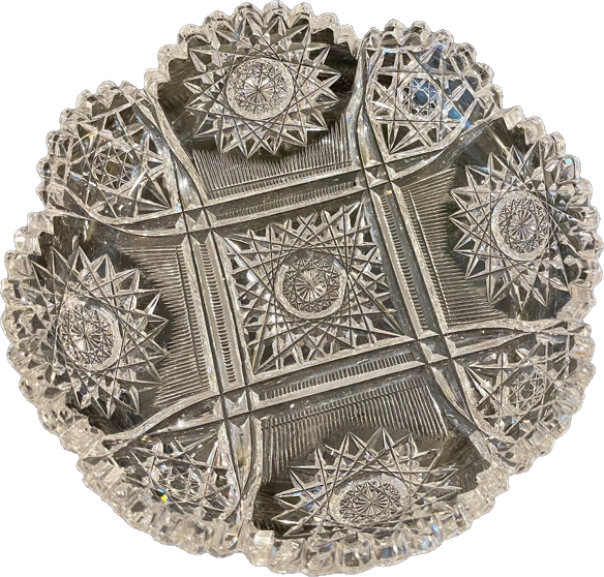
Published on consciouschoicemastery.com | Approx. 8-10 min read
The Apprentice’s Recognition
In 1863, a young Thomas G. Hawkes walked into J. Hoare’s cut glass workshop in Brooklyn, carrying nothing but curiosity and willingness to learn. He couldn’t have known he was about to become one of America’s most celebrated cut glass masters, or that his company would define excellence for generations.
But something in that first moment of watching master craftsmen transform raw crystal into dazzling artworks awakened his recognition: This is what mastery looks like.
That recognition—the moment you see sophisticated intelligence at work and know you want to develop that same capability—is where all conscious mastery begins.
Stage 1: The Foundation Recognition (Unconscious Competence Awareness)
Hawkes’ Early Learning: Seeing the Invisible Patterns
Young Hawkes didn’t start by trying to create masterpieces. He began by watching—really watching—how master cutters moved, how they held their tools, how they read the glass. He was developing what would become his Three-Level Guidance System:
Level 1 – Inner Wisdom Development: Learning to feel the resistance of glass, to sense when a cut was right through his hands and body
Level 2 – Experience Accumulation: Observing thousands of cuts, noting what worked and what didn’t, building his personal database of pattern recognition
Level 3 – Universal Principles Understanding: Grasping the fundamental laws that governed all excellent cut glass work—structural integrity, light refraction, aesthetic proportion
Your Parallel: Recognition of Your Existing Mastery
Most people miss this crucial first stage. They try to jump directly to advanced techniques without recognizing the sophisticated intelligence they already possess in other areas of their lives.
But if you’re reading this, you’ve already demonstrated mastery in multiple domains. You’ve learned complex skills—language, social navigation, professional capabilities, relationship management. You’ve developed your own Inherent Capability through thousands of unconscious practice sessions.
The question isn’t whether you can develop mastery. The question is: Where in your life are you already operating with sophisticated intelligence that you haven’t consciously recognized?
This is Continuous Choice awareness—recognizing that you’ve been choosing to develop competence your entire life, often without realizing the depth of intelligence involved.
Stage 2: The Conscious Development (Systematic Skill Building)
Hawkes’ Methodical Progression: Partnership with Learning
Hawkes didn’t remain an observer. He systematically progressed through increasingly complex tasks:
- Simple straight cuts under supervision
- Basic geometric patterns with guidance
- Complex intersecting designs with feedback
- Eventually, original pattern creation with master consultation
But here’s what made Hawkes exceptional: he approached each stage as Conscious Self Partnership. He wasn’t trying to impress anyone or rush to the next level. He was partnering with his developing capability, letting it unfold naturally while applying conscious attention to his growth.
Your Parallel: The Five Essential Life Principles as Mastery Foundation
Your path to conscious mastery in any domain—whether it’s decision-making, creative work, leadership, or relationships—follows the same systematic progression. The Five Essential Life Principles become your foundation:
Adaptive Flexibility in Learning:
- You adapt every learning approach to your unique learning style and circumstances
- There’s no single “right” way to develop mastery—you find what works for you
- Like Hawkes adjusting his technique to different types of glass, you adjust your development approach to different types of challenges
Continuous Choice in Growth:
- You recognize that every moment of practice is a choice to engage consciously or unconsciously
- You choose to see setbacks as feedback rather than failures
- Like Hawkes choosing to stay present with each cut rather than rushing to finish, you choose presence over performance
Available Support Through Learning:
- You actively seek mentorship, feedback, and resources rather than trying to figure everything out alone
- You recognize that all masters built their expertise through accessing available support
- Your Three-Level Guidance System becomes more sophisticated as you consciously develop it
Inherent Capability Trust:
- You trust that your capacity for mastery is part of who you are, not something you lack and must acquire
- You approach skill development from abundance rather than deficiency
- Like Hawkes trusting his hands to learn the craft, you trust your natural intelligence to integrate complex capabilities
Conscious Self Partnership in Development:
- Your conscious self becomes your ally in skill building rather than your critic
- You develop inner dialogue that supports rather than sabotages your learning
- You recognize resistance and self-doubt as natural parts of the mastery process, not evidence of inability
Stage 3: The Independent Mastery (Creating Your Own Signature)
Hawkes’ Bold Transition: From Following to Leading
By the 1880s, Hawkes had mastered every technique Hoare’s workshop could teach him. But instead of staying comfortable in his expert employee role, he made a conscious choice that would define his legacy: he left to establish T.G. Hawkes & Company.
This wasn’t reckless ambition. This was conscious mastery recognizing its readiness for independence.
Hawkes didn’t abandon everything he’d learned—he integrated it into his own signature style. His Adaptive Flexibility allowed him to honor traditional techniques while innovating new approaches. His Continuous Choice awareness helped him build a company culture that developed other masters.
Your Parallel: Trusting Your Mastery to Create Original Value
The transition from competent to master happens when you stop asking “Am I doing this right?” and start asking “What wants to emerge through my unique capability?”
This is the scariest and most important stage of conscious mastery development. You move from following established patterns to creating your own. You transition from:
Consumer to Creator:
- Instead of just applying techniques others developed, you begin developing approaches that serve your specific vision
- Your Three-Level Guidance System becomes sophisticated enough to navigate uncharted territory
- You trust your Inherent Capability to handle challenges you’ve never faced before
Student to Teacher:
- You recognize that your unique combination of skills and experience creates value others can’t provide
- Your mastery becomes Available Support for others developing similar capabilities
- You shift from “How do I get better?” to “How do I help others recognize their own mastery?”
Follower to Leader:
- You stop waiting for permission to operate at your highest level
- Your Conscious Self Partnership becomes strong enough to guide you through uncertainty
- You make choices based on what you know to be true rather than what feels safe
Stage 4: The Legacy Creation (Mastery That Outlasts You)
Hawkes’ Lasting Impact: Building Systems That Develop Other Masters
T.G. Hawkes & Company didn’t just produce beautiful cut glass—it produced master craftsmen. Hawkes created a culture where his Five Essential Life Principles became the foundation for developing others:
- Adaptive Flexibility: Teaching apprentices to find their own relationship with the craft rather than mechanically copying
- Continuous Choice: Creating an environment where everyone chose excellence moment by moment
- Available Support: Establishing mentorship systems where masters actively developed emerging talent
- Inherent Capability: Operating from the assumption that everyone had the potential for mastery
- Conscious Self Partnership: Encouraging craftsmen to develop their own signature styles and creative expression
Hawkes’ company outlasted him because he built mastery into the system itself, not just into his personal capability.
Your Parallel: Mastery That Creates Value Beyond Your Individual Achievement
True mastery isn’t about becoming the best at something—it’s about developing your capabilities so fully that they create lasting value through everything you touch.
In Your Work: Your mastery shows up as approaches, insights, and innovations that continue benefiting people long after you’ve moved on to new challenges.
In Your Relationships: Your conscious choice mastery becomes a model that helps others recognize and develop their own sophisticated decision-making capabilities.
In Your Leadership: Whether formal or informal, your mastery creates environments where other people’s Inherent Capability gets recognized and developed.
In Your Legacy: Like Hawkes’ cut glass pieces that still dazzle viewers 150 years later, your conscious choices create value that appreciates over time rather than diminishing.
The Master’s Recognition: From Development to Expression
The Full Circle Understanding
Here’s what Hawkes understood by the end of his career that he couldn’t have grasped as an apprentice: Mastery isn’t something you achieve—it’s something you become.
The young man who walked into Hoare’s workshop was already capable of mastery. The years of development didn’t create that capability—they revealed it, refined it, and gave it sophisticated expression.
Your journey toward conscious mastery in any domain follows the same recognition:
You don’t lack mastery—you lack recognition of the mastery you already possess.
You don’t need to acquire sophisticated intelligence—you need to partner with the intelligence you already have.
You don’t need to become someone different—you need to become more fully who you already are.
The Mastery Integration Practice
Like Hawkes’ systematic approach to skill development, conscious mastery unfolds through consistent practice:
Morning Mastery Intention:
- Connect with your conscious self and identify one area where you’re ready to operate from mastery rather than learning
- Ask your Three-Level Guidance System: “Where is my capability ready for fuller expression?”
Daily Mastery Moments:
- Look for opportunities to apply your highest level of capability rather than your most comfortable level
- Use the Five Essential Life Principles as your foundation for operating from excellence
- Practice Conscious Self Partnership by treating your developing mastery as an ally rather than a performance to judge
Evening Mastery Recognition:
- Notice where you operated from mastery versus where you played small
- Celebrate evidence of your Inherent Capability without minimizing areas for continued growth
- Ask: “How did my mastery create value today that extends beyond my individual achievement?”
The Living Legacy: Mastery That Keeps Expanding
Beyond Individual Excellence
T.G. Hawkes’ greatest innovation wasn’t any single cut glass pattern—it was creating a culture where mastery could develop and express itself systematically. His legacy continues through everyone who recognizes their own capability and chooses to develop it consciously.
Your mastery has the same potential for ongoing impact. Every time you:
- Recognize sophisticated intelligence you already possess
- Choose to develop that intelligence consciously rather than leaving it unconscious
- Create value through your capabilities that serves others
- Build systems or relationships that help other people recognize their own mastery
…you’re following the path Hawkes pioneered from apprentice to master to legacy creator.
The Recognition: You’re not trying to become a master. You’re recognizing the mastery that’s already emerging through your conscious choices and giving it fuller expression.
The apprentice, the developing craftsperson, the independent master, and the legacy creator—they’re all the same person at different stages of Conscious Self Partnership.
The mastery was always there. The development process simply reveals it.
What capability do you already possess that’s ready for conscious development? Where in your life are you operating as an advanced apprentice when you could be creating your own signature mastery? What would change if you trusted your inherent capability enough to move from following established patterns to creating original value?
@ 2025 Lee Greene