Don Giovanni & Unconscious Choice: Mozart’s Study in Intelligence Without Awareness
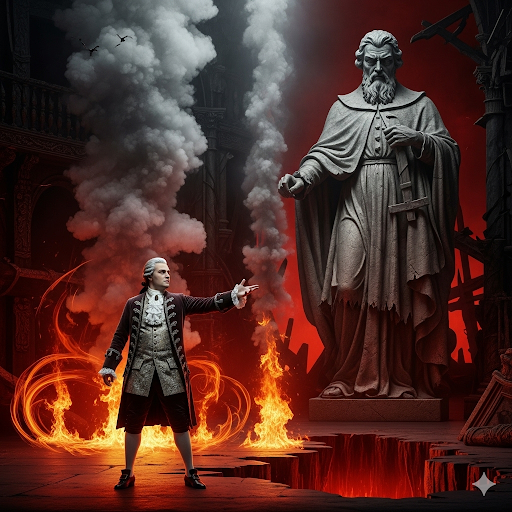
Published on consciouschoicemastery.com | Approx. 10-12 min read
The Nature of Unconsciousness
Don Giovanni possesses remarkable intelligence. He reads people flawlessly, executes complex social strategies, adapts his approach to different situations, and demonstrates extraordinary charisma. Watching Mozart’s opera, you witness someone with all the tools for masterful conscious choice.
Yet from his first entrance to his final “No!” before damnation, Don Giovanni never makes a single conscious choice. He operates entirely on autopilot—unconscious patterns running automatically, creating predictable results without any awareness of the choice-making process.
This makes him the perfect case study for understanding Continuous Choice without consciousness: choices are still being made, consequences still unfold, patterns still create results—but entirely without conscious partnership or awareness.
Don Giovanni “happened” through unconscious choice, just as consciously as someone choosing awareness. The difference isn’t in the nature of the intelligence—it’s in whether that intelligence operates with or without conscious partnership.
The Unconscious Violation of the Five Essential Life Principles
Adaptive Flexibility → Rigid Repetition Loops
Don Giovanni demonstrates natural social adaptability—he adjusts his seduction style for peasant girls versus noblewomen, changes tactics based on resistance levels, and shows remarkable strategic flexibility in moment-to-moment situations.
But this is adaptive flexibility without consciousness—automatic pattern-matching rather than conscious adaptation. He never questions whether his fundamental approach serves him. He never asks whether repeated failed relationships indicate something needs changing in his basic framework.
The Unconscious Pattern:
- Surface adaptability (different techniques for different targets)
- Deep rigidity (same fundamental approach regardless of consequences)
- No learning from feedback (each failure blamed on external factors, never internal patterns)
Conscious Adaptive Flexibility would involve recognizing: “This pattern isn’t creating what I actually want. What approach might serve my authentic desires rather than just my automatic habits?”
Don Giovanni never reaches this recognition because he never pauses to examine what he actually wants beneath his automatic drives.
Continuous Choice → Unconscious Automation
This principle recognizes that you’re always choosing your responses and interpretations, even when circumstances feel limiting. Don Giovanni perfectly demonstrates continuous choice operating unconsciously—he’s constantly choosing, but without any awareness that choices are being made.
Every Interaction Shows Unconscious Choice:
- How to interpret each woman’s responses (always as challenges to overcome rather than communications to understand)
- Whether to escalate or withdraw when meeting resistance (always escalate, never withdraw)
- How to respond to warnings or guidance (dismiss immediately, never consider)
His choices follow such predictable patterns that other characters can anticipate his responses perfectly. Leporello knows exactly how Don Giovanni will react to any situation because the unconscious patterns are completely automatic.
Conscious Continuous Choice involves recognizing: “I’m choosing my interpretation here. I’m choosing my response. What choice would serve authentic connection rather than automatic reaction?”
Don Giovanni never experiences the gap between stimulus and response where conscious choice becomes possible.
Available Support → Systematic Rejection
Don Giovanni receives extraordinary amounts of available support throughout the opera, but rejects it all automatically without conscious consideration:
Level 1 – Inner Wisdom (Leporello as External Conscience): His servant consistently offers practical wisdom, moral reasoning, and reality checks about the consequences of their actions. Don Giovanni dismisses this guidance instantly, without pause or consideration.
Level 2 – Life Experience (Donna Elvira’s Persistent Warnings): A woman who knows him intimately provides repeated, detailed feedback about the patterns and their consequences. He treats her persistence as annoyance rather than valuable information about his impact on others.
Level 3 – Universal Principles (The Commendatore’s Final Offer): Even supernatural intervention offering ultimate guidance for transformation gets refused automatically. His “No, no, no!” comes without hesitation or consideration—pure unconscious reaction.
Conscious Available Support involves recognizing: “Multiple sources are offering me feedback and guidance. What if I paused to consider whether this information might serve my authentic development?”
Don Giovanni never develops the capacity to receive input because receiving requires conscious partnership, and he operates entirely on automatic patterns.
Inherent Capability → Destructive Application Without Recognition
Don Giovanni possesses extraordinary inherent capabilities:
- Remarkable social intelligence and people-reading abilities
- Strategic thinking and complex planning capacity
- Natural charisma and ability to create intense connections
- Natural understanding of psychology and motivation
But he applies these capabilities entirely unconsciously, without recognition that they’re choices about how to use natural gifts.
The Unconscious Application Pattern: All capabilities automatically channeled toward conquest and domination, never toward authentic connection, mutual pleasure, or genuine service to others.
Conscious Inherent Capability involves recognizing: “I have these natural gifts. How can I apply them in ways that serve authentic expression and genuine benefit rather than just automatic pattern fulfillment?”
Don Giovanni never questions how he uses his capabilities because he never recognizes that application is a choice.
Conscious Self Partnership → Pure Reactive Patterns
Perhaps most tragically, Don Giovanni shows no evidence of any internal dialogue, self-reflection, or conscious partnership with his own deeper intelligence. He operates entirely from reactive patterns without any consulting of inner wisdom or authentic desires.
No Conscious Self Dialogue:
- Never questions his own motivations or desires
- Never examines whether his patterns create the experiences he actually wants
- Never pauses to ask his deeper intelligence for guidance about situations
- Never recognizes the difference between automatic reactions and conscious responses
Conscious Self Partnership involves ongoing internal collaboration: “What does my authentic self recognize about this situation? What response would serve my genuine development and create real value?”
Don Giovanni never accesses this internal partnership because he never recognizes that he has choice about whether to operate reactively or consciously.
The Three-Level Guidance System Operating Unconsciously
Level 1 – Inner Wisdom: Completely Inaccessible
Don Giovanni demonstrates no connection to inner wisdom or authentic knowing. His “intuition” about people serves only pattern recognition for manipulation rather than genuine understanding or connection.
When he accurately reads Zerlina’s innocent nature, he uses this recognition to exploit her vulnerability rather than honor her authenticity. His people-reading abilities operate entirely in service of unconscious conquest patterns rather than conscious understanding or authentic response.
Level 2 – Life Experience: Pattern Repetition Without Learning
Despite vast experience with relationships and their consequences, Don Giovanni extracts no wisdom from accumulated experience. Each interaction becomes data for refining manipulation techniques rather than information about what creates authentic satisfaction or genuine connection.
His experience database serves unconscious pattern optimization rather than conscious learning. He gets better at executing his automatic patterns, but never questions whether the patterns themselves serve his authentic development.
Level 3 – Universal Principles: Complete Disconnection
Don Giovanni operates in complete disconnection from universal principles about human relationship, mutual respect, natural consequences, or ethical consideration. He behaves as if universal principles don’t apply to him rather than recognizing his choices as part of larger moral and social systems.
Even when supernatural forces explicitly represent universal moral order, he rejects their relevance to his situation. This isn’t rebellion against universal principles—it’s unconscious operation as if they simply don’t exist.
The Other Characters: Degrees of Conscious Choice
Donna Anna: Conscious Choice Under Extreme Circumstances
Donna Anna demonstrates how conscious choice operates even when facing traumatic circumstances. She consciously chooses to transform violation into determination for justice, grief into sustained commitment, and trauma into empowerment for both herself and others.
Her Conscious Self Partnership is evident in how she processes her father’s death and her own experience—she doesn’t react purely from trauma but consciously chooses responses that serve justice and her authentic development.
Donna Elvira: Conscious Choice Despite Repeated Disappointment
Elvira shows Conscious Continuous Choice by consistently choosing love and attempted redemption over bitterness and revenge, even when her approach repeatedly fails to change Don Giovanni’s patterns.
Her Available Support comes from her own moral clarity and spiritual understanding, which she maintains despite Don Giovanni’s unconscious rejection of guidance.
Don Ottavio: Steady Conscious Choice
Ottavio demonstrates Adaptive Flexibility by maintaining consistent principles (honor, loyalty, justice) while adapting his methods to changing circumstances. His conscious choice operates through sustained commitment rather than dramatic transformation.
Leporello: Emerging Conscious Choice
Perhaps most interesting, Leporello shows the development of conscious choice awareness throughout the opera. He begins as unconscious enabler but gradually develops conscious recognition of the moral problems with their patterns.
His evolution demonstrates how Conscious Self Partnership can emerge—he begins consulting his own moral intelligence instead of automatically following Don Giovanni’s unconscious patterns.
The Final Choice Point: Consciousness Offered, Unconsciousness Chosen
The Commendatore’s Ultimate Guidance
The supernatural finale represents the ultimate Available Support moment—universal principles themselves offering conscious choice. The Commendatore’s “Repent!” (Pentiti!) isn’t moral judgment—it’s an offer of conscious recognition and choice about patterns and their consequences.
This moment demonstrates the Continuous Choice principle perfectly: Don Giovanni is offered the opportunity to recognize his unconscious patterns and choose conscious awareness instead.
“No, No, No!” – Pure Unconscious Reaction
Don Giovanni’s triple refusal comes without pause, consideration, or conscious deliberation. It’s pure automatic reaction—unconscious patterns rejecting consciousness itself.
This isn’t moral defiance—it’s unconscious automation so complete that even supernatural intervention can’t create the gap between stimulus and response where conscious choice becomes possible.
The Natural Consequence
What follows isn’t punishment—it’s the natural result of unconscious choice operating without conscious partnership. Unconscious patterns, followed to their logical conclusion without conscious modification, create their own natural endpoints.
The “damnation” represents what happens when intelligence operates without consciousness indefinitely—it creates increasingly constrained possibilities until unconscious patterns reach their natural completion.
Your Recognition: Conscious Choice vs. Unconscious Automation
The Don Giovanni Pattern in Daily Life
Most people don’t operate at Don Giovanni’s extreme level of unconscious unawareness, but many demonstrate similar patterns at smaller scales:
Unconscious Relationship Patterns:
- Repeating the same relationship dynamics without recognizing them as chosen patterns
- Using social intelligence for manipulation rather than authentic connection
- Rejecting feedback about relational impact without conscious consideration
Unconscious Professional Patterns:
- Applying considerable capabilities toward goals without questioning whether those goals serve authentic development
- Automatic rejection of guidance or feedback about professional approach
- Natural skills serving unconscious status or security drives rather than conscious contribution
Unconscious Decision Patterns:
- Making choices based on automatic preferences without conscious examination of whether those choices serve authentic desires
- Complex analysis serving unconscious avoidance rather than conscious forward movement
- Adaptive reasoning used to justify unconscious patterns rather than examine them
The Conscious Alternative
Conscious Choice Recognition:
Instead of: “This is just how I am in relationships” (unconscious pattern acceptance)
Conscious Choice: “I’m choosing this relationship pattern. Does it serve authentic connection?”
Instead of: “This feedback doesn’t apply to me” (automatic rejection)
Conscious Choice: “I’m choosing how to interpret this feedback. What might serve my development?”
Instead of: “I have to do this because…” (unconscious compulsion)
Conscious Choice: “I’m choosing this approach. What choice would serve my authentic expression?”
The Integration: Mozart’s Teaching About Choice
The Operational Difference
Mozart’s genius lies in showing that the difference between conscious and unconscious choice isn’t about intelligence, abilities, or capability—it’s about awareness and partnership with your own choice-making process.
Don Giovanni demonstrates that unconscious intelligence can be remarkably acute while remaining completely unconscious. The tragedy isn’t that he lacks capability—it’s that extraordinary capability operates without conscious partnership.
The Daily Choice Recognition
Every moment offers the same fundamental choice Don Giovanni faces throughout the opera: Will you operate consciously or unconsciously?
Unconscious Operation:
- Automatic reactions based on established patterns
- No recognition that responses are chosen rather than inevitable
- Rejection of feedback and guidance without consideration
- Application of capabilities toward unconscious drives rather than conscious values
Conscious Operation:
- Recognition that responses are choices rather than automatic reactions
- Conscious Self Partnership in examining patterns and their effectiveness
- Receptivity to Available Support and feedback about impact and consequences
- Adaptive Flexibility based on whether patterns serve authentic development
The Continuous Choice Understanding
The Continuous Choice principle means you’re always choosing, whether consciously or unconsciously. Don Giovanni’s choices still created results, still followed patterns, still generated consequences—just without conscious awareness or partnership.
Your Recognition: You don’t need to become more intelligent or more capable. You need to become more conscious about the intelligence and capability you already possess and how you’re choosing to apply them.
The Living Recognition: Intelligence Needs Consciousness
Beyond Moral Judgment
Don Giovanni’s tragedy isn’t moral failure—it’s unconscious operation of natural intelligence. His patterns weren’t evil; they were unconscious, automatic, and operated without conscious partnership or awareness of choice.
This recognition removes moral judgment while maintaining clear acknowledgment of consequences. Unconscious patterns still create results—they just do so without conscious direction or learning from feedback.
The Daily Unconscious Choice Recognition
The Don Giovanni Question: Where in your life are you operating natural intelligence without conscious partnership?
Where do you automatically reject guidance without conscious consideration? Where do you apply considerable capabilities toward unconscious patterns rather than conscious values? Where do you repeat approaches without examining whether they serve authentic development?
The Conscious Choice Alternative: Recognition that every response, interpretation, and application of your capabilities is a choice you’re making, and you can choose to make these choices consciously rather than automatically.
Don Giovanni demonstrates that consciousness isn’t something you either have or lack—it’s something you choose to operate with or without, moment by moment, choice by choice.
The fundamental recognition: Your intelligence is already adaptive, inherently capable, and valuable. The question is whether you’ll partner with it consciously or let it operate on autopilot.
Where in your life might your intelligence be operating unconsciously? What automatic patterns could benefit from conscious partnership? How might recognizing your continuous choice-making capacity change your relationship with your own intelligence and capabilities?
@ 2025 Lee Greene