Carl Jung’s Crisis of Inner Authority: Five Principles for Trusting Your Deepest Knowing
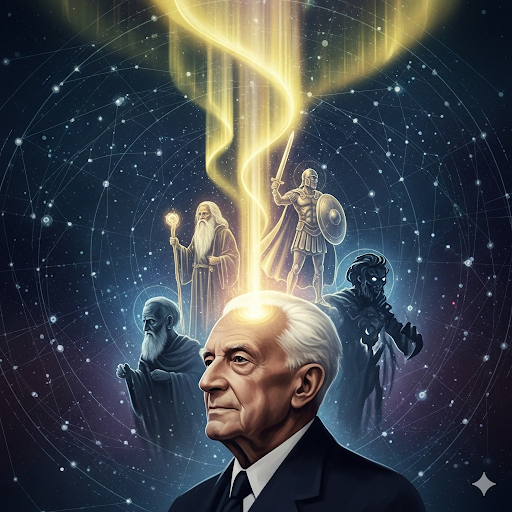
Published on consciouschoicemastery.com | Approx. 10-12 min read
In late 1913, Carl Jung faced a terrifying choice that would define both his career and his understanding of human consciousness. Disturbing visions had been flooding his awareness for months—images of blood covering Europe, devastating floods, and civilizations in ruins. As a respected psychiatrist, Jung knew these could be symptoms of psychotic breakdown. As a human being seeking truth, he sensed they might represent something deeper.
The choice seemed binary and devastating: dismiss the visions and risk ignoring profound insight, or trust them and risk professional destruction if they indicated mental illness. Most people in Jung’s position would have chosen safety—suppress the disturbing images, focus on conventional psychiatric work, and hope the episodes would pass quietly.
Jung chose a third path that revealed revolutionary principles for navigating uncertainty: he decided to engage consciously with the visions while maintaining critical discernment, documenting everything meticulously while remaining open to multiple interpretations. When World War I erupted in 1914, Jung felt profound relief—not because he welcomed global tragedy, but because external events validated that his inner experiences connected to collective realities beyond his personal psyche.
This crisis became the foundation of Jung’s most important contributions to psychology: the understanding that individual consciousness connects to broader patterns, that inner authority can access wisdom unavailable to purely rational analysis, and that apparent psychological disturbance sometimes represents breakthrough rather than breakdown.
Jung’s approach to his crisis demonstrates five essential principles for making decisions when your deepest knowing conflicts with external expectations, when trusting your inner guidance feels risky, and when the stakes of being wrong seem impossibly high.
Jung’s Five Principles of Inner Authority Navigation
Principle 1: Adaptive Flexibility – “Multiple Interpretations Can Coexist”
Jung never forced his visions into a single explanatory framework. He remained simultaneously open to psychological, symbolic, collective, and even prophetic interpretations without needing to choose definitively between them. This intellectual flexibility allowed him to learn from the experience regardless of which interpretation proved most accurate.
Jung’s Adaptive Flexibility in Action:
- Multi-level analysis: Explored personal psychological meanings, symbolic interpretations, and potential collective significance simultaneously
- Professional adaptation: Integrated vision experiences into his psychiatric practice without abandoning scientific rigor
- Theoretical evolution: Used the crisis to develop new concepts (collective unconscious, active imagination) rather than forcing experiences into existing frameworks
- Cultural integration: Drew from Eastern philosophy, mythology, and alchemical traditions to understand experiences that Western psychology couldn’t adequately explain
Modern Application: Like Jung, you can hold multiple possible interpretations of confusing or intense inner experiences. Career dissatisfaction might represent both practical workplace issues and deeper calling toward different contribution. Relationship conflicts might indicate both specific communication problems and fundamental incompatibility questions. Health challenges might involve both medical treatment and lifestyle evolution needs.
Jung’s Adaptive Flexibility Practice: When facing complex inner experiences, ask: “What if multiple interpretations of this situation are simultaneously valid?” rather than “What’s the one correct explanation?”
Principle 2: Continuous Choice – “Each Vision Requires Fresh Response”
Jung treated each disturbing vision as a separate choice point rather than allowing early experiences to determine his response to later ones. He documented and analyzed each episode individually while building understanding over time. This prevented him from either dismissing all experiences or accepting all experiences uncritically.
Jung’s Continuous Choice in Action:
- Episode-by-episode evaluation: Assessed each vision’s content, emotional impact, and potential meanings without predetermined interpretation
- Response refinement: Adjusted his engagement methods based on what he learned from previous experiences
- Professional integration: Made fresh choices about which insights to share publicly and which to keep private for continued development
- Theoretical development: Used each new experience to refine rather than abandon his evolving understanding of psyche dynamics
Modern Application: You can respond to each inner impulse, creative insight, or intuitive guidance individually rather than creating rigid rules about always trusting or always dismissing inner experiences. One strong instinct about changing careers might deserve serious consideration while another might need more development. One relationship insight might warrant immediate action while another might need time for clarification.
Jung’s Continuous Choice Practice: When experiencing strong inner guidance, ask: “What does this specific insight deserve in terms of attention and action?” rather than “Should I always trust or always dismiss these experiences?”
Principle 3: Available Support – “Seek Understanding From Multiple Sources”
Jung systematically sought support for understanding his experiences while maintaining interpretive authority. He studied mythology, religious texts, alchemical works, and cross-cultural spiritual practices. He consulted with colleagues while carefully choosing which aspects of his experience to share. He accessed available knowledge while forming his own conclusions.
Jung’s Available Support in Action:
- Cross-cultural research: Studied how different cultures understood visions, dreams, and altered states of consciousness
- Scholarly collaboration: Shared selective aspects of his experience with trusted colleagues while protecting his professional reputation
- Historical precedents: Researched how previous thinkers had navigated similar experiences of inner authority versus external skepticism
- Personal analysis: Engaged in self-analysis and later analysis with others to understand psychological dimensions
Modern Application: When facing decisions that require trusting inner guidance, you can access support from multiple sources—books by people who’ve navigated similar choices, mentors who understand your field and personal development, spiritual or therapeutic guidance for inner work, peer support from others making similar transitions. Like Jung, you can gather information while maintaining decision-making authority.
Jung’s Available Support Practice: When trusting inner guidance feels risky, ask: “What sources of understanding and support are available that respect both my inner authority and my need for practical wisdom?”
Principle 4: Inherent Capability – “Trust Your Natural Capacity for Discernment”
Jung never doubted his fundamental ability to distinguish between genuine insight and psychological disturbance, even when the content of his experiences was disturbing. He trusted his natural intelligence, psychological training, and capacity for self-observation to navigate the crisis without external authorities making decisions for him.
Jung’s Inherent Capability in Action:
- Diagnostic self-assessment: Used his psychiatric training to monitor his own mental state while remaining open to non-pathological interpretations
- Intellectual integration: Trusted his ability to synthesize insights from psychology, philosophy, and spiritual traditions into coherent understanding
- Professional judgment: Made independent decisions about which aspects of his experience to integrate into his therapeutic practice
- Creative application: Trusted his capability to transform personal crisis into contributions that served others facing similar inner authority questions
Modern Application: You have natural capacity to discern between authentic inner guidance and wishful thinking, between genuine calling and escapist fantasy, between healthy risk-taking and reckless impulsivity. Like Jung, you can trust this discernment ability while accessing external support and maintaining practical caution. Your natural intelligence applies to evaluating inner experiences just as it applies to evaluating external opportunities.
Jung’s Inherent Capability Practice: When inner guidance conflicts with external expectations, ask: “What does my natural discernment recognize about the quality and reliability of this inner knowing?” rather than “Should I trust myself or trust others?”
Principle 5: Conscious Self Partnership – “Inner Authority and Rational Mind Work Together”
Jung’s breakthrough came from partnering his rational psychological training with his deeper psychological experiences rather than forcing them to fight each other. His conscious mind provided analytical framework while his unconscious provided content. Neither dominated—they collaborated to create understanding that neither could achieve alone.
Jung’s Conscious Self Partnership in Action:
- Analytical integration: Used rational psychological analysis to understand symbolic and emotional content of visions
- Documentation practice: Maintained detailed written records that allowed both immediate experience and later reflection
- Theoretical synthesis: Developed concepts that honored both scientific rigor and depth psychological insight
- Professional application: Created therapeutic methods that helped others partner their conscious and unconscious minds
Modern Application: Your conscious self—the part that’s aware of thoughts, feelings, and circumstances—can partner with your deeper knowing rather than fighting it. Your analytical mind can provide practical structure while your intuitive wisdom provides direction and meaning. Your rational capabilities can serve authentic inner guidance rather than suppressing it.
Jung’s Conscious Self Partnership Practice: When facing decisions that involve both practical considerations and inner calling, ask: “How can my analytical mind serve my deeper wisdom, and how can my authentic knowing inform my practical planning?”
The Red Book Integration: All Five Principles Under Ultimate Pressure
Jung’s decision to create what became known as “The Red Book”—his private documentation of the vision experiences—demonstrates all five principles working together when inner authority conflicts most dramatically with external expectations:
The Professional Crisis: Documenting and seriously engaging with disturbing psychological experiences risked professional suicide in early 20th-century psychiatry.
The Conscious Choice: Rather than choosing between dismissing the experiences or abandoning professional caution, Jung created a systematic method for engaging with inner authority while maintaining critical discernment.
Five Principles Integration:
- Adaptive Flexibility: Created new methods for engaging with unconscious material that integrated artistic, analytical, and spiritual approaches
- Continuous Choice: Treated each vision as requiring fresh response while building understanding over time
- Available Support: Accessed wisdom from multiple cultural and intellectual traditions while forming independent conclusions
- Inherent Capability: Trusted his natural capacity for psychological discernment while remaining open to paradigm-shifting insights
- Conscious Self Partnership: Partnered rational analysis with deeper psychological experience to create new understanding
The Revolutionary Result: Work that became foundational to depth psychology and demonstrated how individual inner authority can access wisdom that serves collective understanding.
The Jung Method for Modern Inner Authority Navigation
The “Active Imagination Protocol” for Complex Inner Guidance
When experiencing strong inner impulses that conflict with practical considerations: Apply Jung’s systematic approach. Document the experience thoroughly while maintaining analytical perspective (Conscious Self Partnership). Research how others have navigated similar inner guidance while forming your own conclusions (Available Support). Consider multiple possible interpretations without forcing premature resolution (Adaptive Flexibility). Trust your natural capacity for discernment between authentic guidance and wishful thinking (Inherent Capability). Treat each instance of inner guidance as requiring individual evaluation rather than blanket acceptance or dismissal (Continuous Choice).
When facing career or life transitions that feel “crazy” to others: Channel Jung’s professional risk-taking wisdom. Trust your natural ability to assess both practical risks and authentic calling (Inherent Capability). Adapt your approach to honor both inner guidance and external responsibilities (Adaptive Flexibility). Access available support from mentors, counselors, and others who’ve made similar transitions (Available Support). Respond to current inner knowing rather than past identity investments or future security fears (Continuous Choice). Partner analytical planning with authentic vision to create grounded but inspired action (Conscious Self Partnership).
When inner knowing conflicts with expert opinion or social expectations: Use Jung’s authority integration model. Evaluate expert opinions through your own discernment rather than accepting or rejecting them automatically (Inherent Capability). Adapt expert guidance to serve your unique situation and authentic values (Adaptive Flexibility). Access multiple sources of expertise and wisdom while maintaining decision-making independence (Available Support). Make choices based on present reality and inner knowing rather than social approval or expert validation (Continuous Choice). Integrate external expertise with internal wisdom to create solutions that honor both practical requirements and authentic calling (Conscious Self Partnership).
The Collective Unconscious Principle: Personal and Universal Integration
Jung’s concept of the collective unconscious—patterns and wisdom shared across humanity—provides a framework for understanding when personal inner guidance connects to broader truths:
Personal Inner Guidance Characteristics:
- Individual psychological needs and patterns
- Personal history and family conditioning
- Individual preferences and escape fantasies
- Ego desires and comfort zone preferences
Collective Wisdom Characteristics:
- Universal human development patterns
- Archetypal themes that appear across cultures
- Guidance toward service and authentic contribution
- Wisdom that benefits both individual and collective good
Integration Discernment: Jung learned to distinguish between personal psychological material and broader wisdom patterns. Personal material requires individual therapeutic work. Collective wisdom patterns often provide guidance for authentic contribution and service.
Modern Application: You can develop similar discernment between personal preferences and authentic calling, between individual psychological needs and genuine service opportunities, between ego desires and deeper wisdom about your contribution to the world.
The Prophetic Dream Paradigm: When Inner Knowing Transcends Individual Perspective
Jung’s relief when World War I validated his visions wasn’t celebration of global tragedy—it was recognition that individual consciousness can access information beyond personal psychological material. This recognition became central to his understanding of how inner authority works.
The Transcendent Inner Authority Recognition:
- Individual consciousness connects to collective patterns and movements
- Personal psychological experiences sometimes reflect broader cultural and historical dynamics
- Inner guidance can provide perspective on situations beyond individual circumstances
- Authentic inner authority serves both individual development and collective benefit
Modern Transcendent Inner Authority Applications:
Professional/Creative Guidance: When your inner guidance about career direction, creative projects, or professional service consistently points toward contributions that seem to anticipate rather than follow market trends or social needs.
Relationship and Family Insights: When your inner knowing about relationship dynamics, family patterns, or community involvement provides perspective that helps others navigate similar challenges.
Cultural and Social Awareness: When your inner responses to cultural changes, social movements, or community needs provide clarity that serves broader understanding and positive action.
The Discernment Requirement: Not all strong inner experiences connect to transcendent wisdom. Jung’s method requires systematic documentation, multiple perspective consultation, and practical validation over time.
The Shadow Work Principle: Integrating Rejected Aspects
Jung’s willingness to engage with disturbing visions rather than suppressing them demonstrates sophisticated shadow work—integrating psychological material that ego consciousness prefers to reject.
The Shadow Integration Method:
- Acknowledge rather than suppress uncomfortable inner experiences
- Engage with threatening psychological material through conscious analysis rather than unconscious acting out
- Extract wisdom from disturbing experiences without being overwhelmed by their emotional content
- Transform personal psychological challenges into understanding that serves others
Modern Shadow Work Decision-Making: When facing inner impulses, dreams, or insights that disturb your self-image or challenge your comfortable life patterns, you can apply Jung’s approach: engage consciously rather than suppress unconsciously, analyze systematically rather than react emotionally, extract wisdom rather than indulge drama, and transform personal challenge into service opportunity.
Professional Shadow Integration: Career dissatisfaction might indicate both personal growth needs and authentic calling toward different contribution. Relationship conflicts might reveal both individual psychological work needs and genuine incompatibility recognition. Creative blocks might reflect both personal resistance patterns and authentic evolution toward different expression.
The Individuation Journey: Becoming Who You Actually Are
Jung’s concept of individuation—becoming your authentic self rather than society’s version of who you should be—provides the ultimate framework for conscious choice-making guided by inner authority.
The Individuation Choice Points:
- When social expectations conflict with authentic development needs
- When professional success patterns no longer serve genuine expression
- When relationship dynamics require choosing between comfort and authenticity
- When creative or spiritual calling demands risking security for meaningful contribution
Jung’s Individuation Method Applied to Modern Choices:
Step 1: Acknowledge Authentic Development (Conscious Self Partnership) What aspects of your genuine nature and capability are seeking expression that current life patterns don’t accommodate?
Step 2: Research Precedents and Possibilities (Available Support) How have others successfully navigated similar authentic development challenges? What support and resources are available for your specific transition?
Step 3: Design Flexible Transition Strategy (Adaptive Flexibility) How can you honor authentic development while meeting practical responsibilities? What experimental approaches allow testing new directions?
Step 4: Trust Natural Capability for Change (Inherent Capability) What evidence exists of your natural ability to learn, adapt, and succeed through previous life transitions and challenges?
Step 5: Choose Authentic Development Over Social Approval (Continuous Choice) What choices serve who you’re becoming rather than who you’ve been or who others expect you to remain?
The Analytical Psychology Legacy: Inner Authority as Universal Human Capacity
Jung’s most important insight wasn’t about his specific visions—it was his recognition that every person has natural capacity for accessing wisdom beyond conscious rational analysis. His crisis became breakthrough because he treated inner authority as universal human capability rather than special psychological phenomenon.
The Universal Inner Authority Principles:
- Every person has access to wisdom beyond conscious rational thinking
- Individual psychological experience often connects to collective patterns and needs
- Authentic inner guidance serves both personal development and service to others
- Inner authority requires conscious partnership with rational discernment for practical application
- Personal psychological crisis often precedes breakthrough to broader understanding and contribution
Your Personal Red Book Moment: Like Jung facing his disturbing visions, you’re encountering some inner guidance that conflicts with external expectations or rational analysis. What would conscious engagement with this inner authority look like rather than suppression or impulsive action?
The Choice Integration: Jung’s legacy demonstrates that trusting inner authority isn’t about rejecting rational analysis—it’s about partnering deeper wisdom with conscious discernment to create understanding and contribution that neither could achieve alone.
Your conscious self has been documenting its own “red book” of authentic guidance, creative insights, and service opportunities. The question isn’t whether this inner authority is “real”—the question is whether you’ll engage with it consciously enough to discover what wants to emerge through your unique contribution to the collective human experience.
What inner guidance have you been dismissing as “impractical” that might represent authentic wisdom about your contribution? Your conscious self partnership has been waiting for permission to engage seriously with the guidance that rational analysis alone cannot provide. The individuation journey begins with trusting your natural capacity to distinguish between ego desires and authentic calling.
@ 2025 Lee Greene