Billy Joel’s Hidden Masterpiece: The Psychological Architecture of “The Stranger”
Published on consciouschoicemastery.com | Approx. 10-12 min read
Billy Joel’s “The Stranger” isn’t just a song – it’s a precisely engineered psychological journey disguised as a pop ballad. What makes it extraordinary isn’t the melody or the lyrics alone, but the way Joel synchronizes musical structure with narrative arc to create meaning that exists in the spaces between the notes and words.
Most songs tell you what to think. “The Stranger” shows you how to think by embedding a complete psychological transformation into its musical DNA. The song operates on multiple levels simultaneously: surface story, musical architecture, and meta-psychological framework. Understanding how these levels interact reveals a blueprint for creating art that doesn’t just entertain but actually changes consciousness.
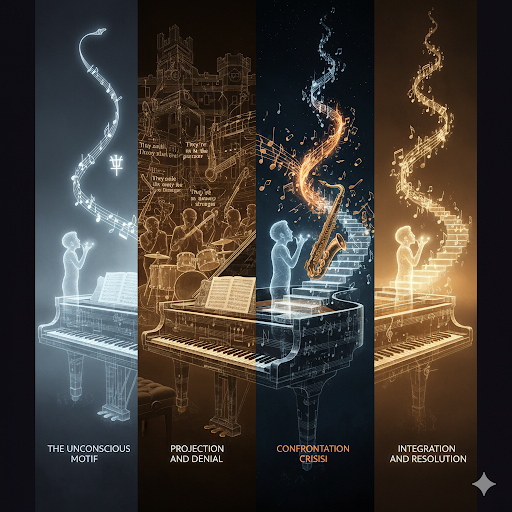
Joel constructed a four-movement structure where each section uses different musical elements to represent different psychological states. The genius lies not in what each section contains, but in how the transitions between sections mirror the process of psychological integration. The song becomes a lived experience of confronting and integrating denied aspects of self.
Here’s how Joel built meaning into the very bones of the composition.
The Four-Movement Architecture
Movement I: The Whistling Prelude (The Unconscious Motif)
The song opens with solo whistling – a simple, haunting melody that feels both familiar and unsettling. This isn’t background music; it’s the unconscious theme being introduced in its pure, undefended form.
Musical Function:
- Isolation: The whistle stands alone, unaccompanied, representing the unconscious content before ego defenses activate
- Simplicity: The melody is accessible but somehow ominous, like a half-remembered dream
- Repetition: The motif establishes itself as something that will return, creating psychological expectation
Psychological Function: The whistling represents the return of the repressed – that aspect of self we’ve pushed down but which continues to surface. It’s presented as innocent, almost childlike, but carries undertones of something more complex. The listener experiences this as a vague sense of recognition without understanding.
Structural Genius: Joel introduces the core psychological content before the ego-mind (lyrics) can create defenses against it. We hear the truth before we can argue with it.
Movement II: The Lyrical Accusation (Projection and Denial)
The full instrumentation enters with the verses and chorus, but notice what happens: the song shifts into accusatory mode, pointing fingers at “them” and “their” behavior. The music becomes fuller, more defended, more complex – mirroring psychological defensiveness.
Musical Function:
- Full arrangement: Piano, bass, drums create a wall of sound representing ego defenses
- Steady rhythm: The beat provides psychological stability while delivering unsettling content
- Major key comfort: Musical pleasantness contradicts the psychological discomfort of the lyrics
Psychological Function: This is the projection phase – seeing our own denied aspects reflected in others. The lyrics describe behavior we recognize but attribute to “them,” not ourselves. The musical comfort allows us to enjoy judging others while remaining unconscious of our own participation in what we’re criticizing.
Structural Genius: The pleasant musical arrangement makes the psychological denial more palatable, letting listeners enjoy the accusation without recognizing they’re being prepared for self-confrontation.
Movement III: The Instrumental Interlude (The Confrontation Crisis)
Here’s where Joel’s architectural mastery becomes undeniable. The whistling motif returns, but transformed – no longer simple and innocent, now woven into a complex instrumental arrangement with saxophone, building to emotional intensity that forces a psychological crisis.
Musical Function:
- Motif transformation: The original whistle theme returns but amplified, unavoidable
- Instrumental complexity: Multiple instruments represent the complexity of what’s being confronted
- Emotional crescendo: The music forces an emotional peak that can’t be intellectualized away
Psychological Function: This is the moment of recognition – the “stranger” we’ve been judging in others is revealed as aspects of ourselves. The whistle that seemed external and innocent is now internal and undeniable. The instrumental nature means this revelation happens below the level of rational thought.
Structural Genius: By using purely instrumental music for the psychological climax, Joel forces the confrontation to happen in feeling rather than thinking, making it more authentic and harder to dismiss.
Movement IV: The Whistling Postlude (Integration and Resolution)
The song returns to solo whistling, but everything has changed. The same melody that opened the song now carries completely different meaning because of the journey we’ve taken. This isn’t repetition – it’s integration.
Musical Function:
- Return to simplicity: The arrangement strips back to solo whistle, but now we hear it differently
- Changed context: The same notes carry different emotional weight because of what we’ve experienced
- Resolution without closure: The ending feels complete but open, like genuine psychological growth
Psychological Function: The whistling now represents the integrated shadow – acknowledged, accepted, no longer projected onto others. The simplicity isn’t innocence regained but wisdom achieved. We’ve moved from unconscious denial through conscious confrontation to conscious integration.
Structural Genius: Joel demonstrates that integration isn’t about eliminating the problematic aspect but changing our relationship to it. The whistle remains the same; our hearing of it transforms.
The Meta-Framework: Music as Psychology
What makes “The Stranger” extraordinary is how Joel embedded psychological process into musical structure. Each movement doesn’t just describe a psychological state – it creates that state in the listener through musical architecture.
The Synchronization Principle
Lyrical Content + Musical Form = Psychological Experience
- Unconscious material (whistling) appears in undefended musical space (solo instrument)
- Defensive projection (accusatory lyrics) appears in defended musical space (full arrangement)
- Forced confrontation (recognition) appears in emotionally intense musical space (instrumental climax)
- Integration (acceptance) appears in transformed musical space (familiar melody, new meaning)
The Transformation Mechanism
Joel shows how psychological transformation actually works:
- Unconscious content emerges in unguarded moments
- Ego defenses activate by projecting onto others
- Reality forces confrontation through crisis or intensity
- Integration occurs when the same content is experienced with new consciousness
The Universal Application
This four-movement structure appears across human psychological development:
- Personal growth: Recognizing our own behaviors we judge in others
- Relationship development: Moving from projection to ownership to integration
- Creative development: Transforming raw impulse through conscious craft into integrated expression
- Spiritual development: Moving from denial through crisis to acceptance of paradox
The Practical Magic: How to Build Meaning Into Structure
Joel’s method provides a template for creating art that changes consciousness rather than just expressing it:
Layer 1: Establish the Core Theme in Pure Form
Present the essential truth before defenses can form. Use the simplest, most direct artistic medium available.
Layer 2: Dress the Theme in Comfortable Complexity
Allow the audience to engage with the theme indirectly, through familiar structures that don’t threaten their defenses.
Layer 3: Force Direct Confrontation
Create a moment of intensity where the core theme becomes undeniable and must be faced directly.
Layer 4: Return to Simplicity with Transformed Meaning
Circle back to the original presentation, but now the audience hears/sees/experiences it completely differently.
The Modern Relevance: Why This Matters Now
In our current cultural moment, we’re surrounded by art that tells us what to think rather than showing us how to think. “The Stranger” demonstrates how artistic structure can guide psychological transformation rather than just delivering entertainment or political messages.
For Artists: This shows how to embed transformational process into creative work rather than just expressing personal experience or social commentary.
For Audiences: This reveals how to engage with art as psychological technology – using well-crafted work to facilitate personal growth rather than just consuming it passively.
For Culture: This points toward art’s highest function – not just reflecting reality but providing tools for transforming consciousness and integrating denied aspects of human experience.
The Deeper Pattern: Art as Consciousness Technology
Joel accidentally created something more than a hit song – he built a consciousness-changing technology disguised as entertainment. The four-movement structure appears throughout transformational art:
- Great novels: Character introduction → conflict development → crisis climax → integrated resolution
- Therapeutic process: Problem emergence → resistance/projection → breakthrough crisis → integration
- Spiritual practice: Unconscious state → awakening discomfort → dark night crisis → integrated wisdom
- Personal development: Awareness → resistance → breakthrough → integration
Your Own Stranger: The Personal Application
Everyone has their own “stranger” – aspects of themselves they see clearly in others but remain blind to in themselves. Joel’s structure provides a map for conscious self-integration:
- Notice what you criticize repeatedly in others (your unconscious whistle)
- Observe your defensive explanations for why you’re different (your projection phase)
- Allow yourself to experience the discomfort of recognizing these traits in yourself (your confrontation crisis)
- Practice accepting these aspects as part of your complete humanity (your integration)
The goal isn’t to eliminate your “stranger” but to change your relationship with it from unconscious projection to conscious integration.
The Architectural Lesson: Structure Creates Meaning
Joel’s genius demonstrates that in transformational art, structure isn’t just the container for meaning – structure IS meaning. The way he organizes musical and lyrical elements doesn’t just support the song’s message; it creates the psychological experience the song describes.
This reveals something crucial about creating meaningful work: the medium must embody the message. You can’t describe transformation; you must create the conditions for transformation to occur in the audience’s experience.
For Writers: Your narrative structure should mirror the psychological journey you want readers to experience.
For Musicians: Your musical architecture should create the emotional states your lyrics describe.
For Speakers: Your presentation structure should guide the audience through the mindset changes you’re advocating.
For Anyone Creating: The form of your work should embody the truth you’re trying to convey.
The Stranger’s Gift: Integration Through Art
“The Stranger” succeeds because it doesn’t lecture about psychological integration – it provides a direct experience of psychological integration. Joel built a four-minute consciousness technology that guides listeners through the complete process of recognizing, confronting, and integrating denied aspects of self.
This is art’s highest function: not just reflecting human experience but providing tools for transforming human experience. Joel created a song that doesn’t just describe the process of meeting your shadow self – it facilitates actually meeting your shadow self.
The whistling that opens and closes the song represents the same psychological content, but your relationship to that content has completely changed through the journey of listening. You’ve moved from unconscious projection to conscious integration in the span of a single song.
That’s the architecture of meaning – using artistic structure to create genuine psychological transformation disguised as entertainment. Joel built a bridge between who you were when the song started and who you could become by the time it ended.
What “stranger” in yourself do you see most clearly in others? The next time you find yourself criticizing someone else’s behavior, listen for your own unconscious whistle – it might be trying to tell you something about an aspect of yourself ready for integration.
@ 2025 Lee Greene