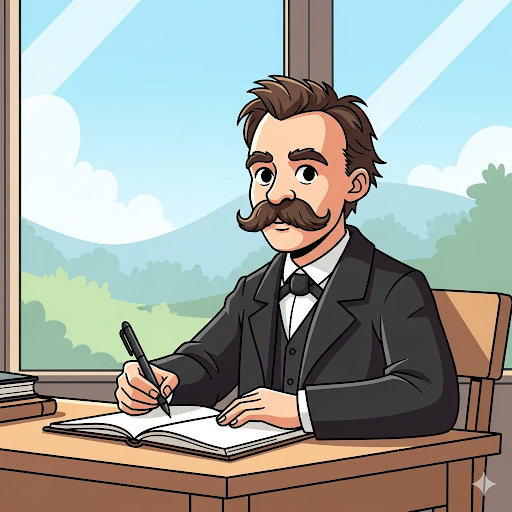
Nietzsche’s genius was conscious pattern recognition. Discover how he transformed limitations into strategic advantages through choice intelligence and practical self-awareness.
Published on consciouschoicemastery.com | Approx. 8-10 min read
There’s a persistent myth about Friedrich Nietzsche: that his philosophical brilliance emerged from his suffering. That his chronic migraines, failing eyesight, and eventual breakdown somehow made him wise. That his famous line “what does not kill me makes me stronger” was about celebrating pain as a path to enlightenment.
This romantic notion misses the real story entirely.
Nietzsche’s philosophical power didn’t come from his suffering—it came from his extraordinary ability to consciously read patterns in his own experience and translate them into practical insights. He developed what we might now call advanced “conscious choice intelligence”—the skill of recognizing how internal and external patterns communicate information about optimal decision-making.
The Real Pattern Behind the Philosophy
From age nine, Nietzsche suffered severe migraines that could last days and left him functionally blind by his late thirties. These weren’t inspiring trials—they were debilitating limitations that forced him to resign his university professorship at 34 and spend his remaining productive years as a wandering, stateless nomad with virtually no readers.
But here’s what made Nietzsche remarkable: instead of merely enduring these constraints, he developed systematic awareness of how they operated and what they revealed about optimal functioning.
Medical research suggests his migraine patterns may have directly shaped his signature aphoristic style. Unable to sustain long periods of concentrated writing, he learned to capture profound insights in brief, intense bursts during pain-free windows. Rather than fighting this limitation, he recognized it as information about a different way of thinking and creating.
Conscious Pattern Recognition in Action
Nietzsche explicitly understood what he was doing. In Beyond Good and Evil, he wrote that philosophy is “a confession on the part of its author and a kind of involuntary and unconscious memoir.” He wasn’t just philosophizing—he was demonstrating conscious awareness that his ideas emerged from his specific patterns of experience.
In his autobiographical Ecce Homo, he described himself as wise “as a consequence of his acute aesthetic sensitivity to nuances of health and sickness in people’s attitudes and characters.” This wasn’t abstract wisdom—it was practical pattern recognition developed through necessity.
He learned to:
- Read his energy patterns to identify optimal windows for creative work
- Recognize health/sickness signals in himself and others before they became obvious
- Translate physical limitations into philosophical strengths (brevity, intensity, precision)
- Use constraint as creative information rather than obstacle
The Intelligence Behind “What Doesn’t Kill Me”
The famous quote is often misunderstood as encouraging people to embrace suffering. But Nietzsche’s actual insight was more sophisticated: he recognized that surviving difficult experiences develops your pattern recognition abilities.
Not because pain itself is valuable, but because navigating challenges requires you to become more conscious of:
- What actually matters versus what you thought mattered
- Which strategies work under pressure versus comfortable conditions
- How your real priorities reveal themselves during constraints
- What you’re actually capable of when familiar supports aren’t available
This isn’t about seeking hardship—it’s about consciously learning from whatever challenges you do face.
Modern Applications of Nietzschean Pattern Recognition
Nietzsche’s approach reveals practical skills we can develop without requiring his extreme circumstances:
Energy Pattern Awareness: Instead of fighting your natural rhythms, recognize when you’re most creative, analytical, or social. Design your schedule around these patterns rather than against them.
Limitation as Information: When you consistently struggle with something, ask: “What is this constraint telling me about a better approach?” rather than “How do I force through this?”
Health Signal Recognition: Develop sensitivity to early indicators of stress, burnout, or relationship problems—the subtle patterns that appear before obvious symptoms.
Creative Constraint Translation: Use limitations (time, resources, abilities) as creative parameters that guide you toward more innovative solutions.
The Three-Layer Analysis
Applying Nietzsche’s pattern recognition reveals three levels of information:
Surface Level: “I have chronic health problems that interfere with traditional academic work”
Pattern Level: “My optimal creative periods are brief but intense, suggesting a different approach to intellectual productivity”
Choice Intelligence Level: “I can design a philosophical method around these patterns that turns limitation into strength”
Most people stop at the surface level and either fight the constraint or resign themselves to it. Nietzsche operated at the choice intelligence level, using conscious awareness to extract strategic information from his circumstances.
What This Isn’t About
This approach has nothing to do with:
- Celebrating suffering or suggesting people should endure unnecessary pain
- Claiming that illness leads to wisdom or that healthy people can’t develop insights
- Romanticizing Nietzsche’s tragic mental breakdown (which was devastating, not enlightening)
- Encouraging anyone to neglect medical treatment or accept harmful situations
Nietzsche’s skill was pattern recognition and conscious choice-making, not suffering itself.
The Practical Framework
Nietzsche demonstrates five key elements of conscious choice intelligence:
1. Pattern Awareness: Recognizing recurring themes in your experience rather than treating each instance as isolated
2. Information Translation: Asking “What is this teaching me?” instead of “Why is this happening to me?”
3. Constraint Reframing: Using limitations as creative parameters rather than obstacles to overcome
4. Optimal Timing Recognition: Identifying when conditions align for your best work rather than forcing consistent productivity
5. Strategic Adaptation: Consciously designing approaches that work with your patterns rather than against them
Developing Your Own Choice Intelligence
The question isn’t whether you face constraints or challenges—everyone does. The question is whether you’re consciously extracting intelligence from your patterns of experience.
This requires developing systematic awareness of:
- When you make your best decisions (timing patterns)
- What conditions support your optimal performance (environmental patterns)
- How your limitations point toward unexplored strengths (constraint patterns)
- Why certain approaches consistently work or fail for you (strategic patterns)
Like Nietzsche, you can transform this awareness into practical philosophy—not abstract theories, but lived wisdom that improves your actual choices.
Beyond Individual Application
Nietzsche’s approach also applies to organizational and cultural pattern recognition. Teams, companies, and communities have their own limitation patterns that, when consciously recognized, can become strategic advantages rather than obstacles.
The same choice intelligence that helped Nietzsche transform personal constraints into philosophical innovation can help any individual or group extract wisdom from their specific circumstances.
Learn the Complete System
Nietzsche’s pattern recognition represents just one application of conscious choice intelligence. Whether you’re navigating personal limitations, professional challenges, or creative constraints, the same framework applies: conscious awareness of patterns reveals strategic information for better decisions.
The Conscious Choice Intelligence System teaches you to:
- Develop systematic pattern recognition across all areas of life
- Transform limitations into strategic advantages through conscious reframing
- Extract practical intelligence from constraints and challenges
- Design approaches that work with your authentic patterns rather than against them
- Apply choice intelligence to relationships, career decisions, and creative projects
Rather than hoping wisdom will emerge from experience, you can learn to consciously extract it—just like Nietzsche did with his philosophical insights.
The complete Conscious Choice Intelligence System launches next month, with early access for subscribers who want to master pattern recognition and strategic adaptation.
What patterns in your own experience have you been treating as obstacles that might actually contain strategic information? Share your insights below.
@ 2025 Lee Greene