What acoustic research reveals about precision timing, cooperative coordination, and The Five Principles of Conscious Choice™ in creating seamless collaborative flow
Published on consciouschoicemastery.com | Approx. 10-12 min read
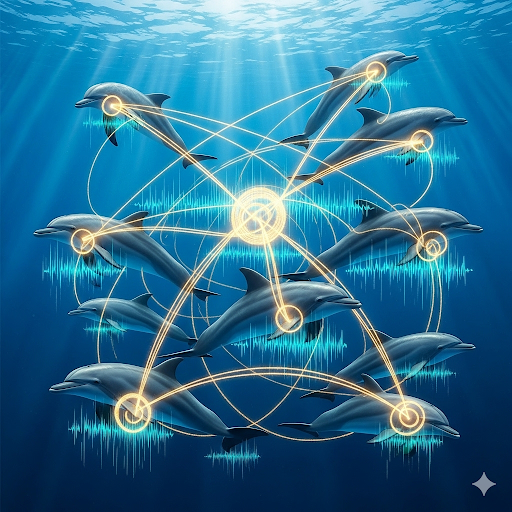
During cooperative hunts in Shark Bay’s crystal waters, male dolphins achieve something remarkable: acoustic coordination precise to 100 milliseconds while producing sounds at rates of 10 calls per second. Their “pop trains” synchronize not just in timing, matching tempo changes in real-time, overlapping their acoustic signals with mathematical precision that rivals professional orchestras.
Dr. Stephanie King’s acoustic research reveals that dolphins coordinate their vocalizations across multiple alliance levels simultaneously. They match tempos, synchronize signal timing, and coordinate acoustic “trains” that can extend across several minutes, all while adapting to changing circumstances and maintaining individual acoustic identity.
This natural timing mastery illuminates The Five Principles of Conscious Choice™ applied to human coordination challenges across team projects, family scheduling, communication timing, and collaborative endeavors.
The Science of Dolphin Acoustic Coordination
Precision Timing and Cooperative Synchrony
Dolphin acoustic coordination operates through systematic timing choices that integrate individual communication needs with collective coordination requirements:
Real-Time Tempo Matching: Research demonstrates dolphins monitor and match each other’s acoustic tempo with precision of 100 milliseconds, even as the tempo changes within a single acoustic sequence. This requires continuous timing assessment and rapid coordination adjustment.
Coordinated Signal Overlap: Multiple dolphins coordinate their acoustic signals to overlap significantly above chance levels, creating acoustic “trains” that maintain group cohesion during cooperative activities.
Adaptive Timing Flexibility: Dolphins modify their timing patterns based on group size, activity type, and environmental conditions while maintaining the precision necessary for effective coordination.
Multi-Level Timing Integration: Perhaps most remarkably, dolphins coordinate timing across different alliance levels simultaneously, maintaining intimate partnership timing while participating in broader group temporal coordination.
The Five Principles of Conscious Choice™ in Dolphin Timing Coordination
ADAPTIVE FLEXIBILITY: Dolphins modify their timing approaches based on group needs and environmental context. Coordination patterns differ dramatically between hunting, traveling, and social activities, proving timing strategies must adapt to circumstances.
CONTINUOUS CHOICE: Every acoustic interaction presents timing decisions. Dolphins constantly choose when to initiate sounds, when to match others’ timing, when to lead tempo changes, and when to follow group rhythm.
AVAILABLE SUPPORT: Dolphins integrate multiple timing information sources when making coordination decisions – individual acoustic preferences, group timing patterns, environmental acoustic conditions, and activity requirements.
INHERENT CAPABILITY: Research consistently demonstrates dolphins’ natural ability to perceive and coordinate complex timing patterns across multiple individuals and activity contexts simultaneously.
CONSCIOUS SELF PARTNERSHIP: Dolphins engage in ongoing integration between their individual timing preferences and group coordination requirements, maintaining personal acoustic identity while participating in collective timing.
Revolutionary Applications for Human Timing and Coordination
The Strategic Timing Framework for Team Effectiveness
Most human team coordination operates through scheduled meetings and assigned deadlines rather than conscious timing choice. Dolphin acoustic intelligence reveals the power of strategic timing awareness.
Traditional Human Approach:
- Follow predetermined schedules without considering natural rhythm or optimal timing
- React to timing conflicts and coordination challenges after they create team dysfunction
- Maintain individual timing preferences without strategic consideration of team coordination needs
- Make timing decisions based on convenience rather than collaborative effectiveness and optimal coordination
Dolphin-Inspired Approach:
- Assess team timing patterns and individual rhythm preferences to optimize collective coordination
- Develop real-time timing awareness that enables responsive coordination and adaptive scheduling
- Practice strategic timing choices that support both individual effectiveness and team synchrony
- Make timing decisions based on collaborative flow and mutual coordination benefit
Implementation Strategy for Team Timing Coordination:
Morning Timing Intention Setting (5 minutes daily):
- Identify key team coordination opportunities and timing-sensitive activities expected today
- Ask your conscious self: “How can I coordinate my timing to support team flow and collective effectiveness today?”
- Choose specific timing approaches for challenging coordination situations and deadline management
- Set intention for adaptive flexibility in timing while maintaining individual productivity and team coordination
Midday Coordination Review (3 minutes):
- Assess timing coordination effectiveness and team synchrony in morning interactions and activities
- Practice continuous choice by adjusting timing strategies based on team feedback and project progress
- Access available support through team communication about timing preferences and coordination needs
- Notice evidence of your inherent capability to sense and coordinate with team timing patterns
Evening Timing Learning Integration (7 minutes):
- Document which timing strategies supported team coordination and which created scheduling conflicts or coordination challenges
- Assess timing investments and their returns for team productivity and individual effectiveness
- Plan tomorrow’s timing approaches based on today’s coordination learning and team rhythm observations
- Build conscious partnership between individual timing preferences and team coordination needs
Questions for Team Timing Coordination:
- Where am I following predetermined schedules rather than optimizing timing for team coordination and collective effectiveness?
- How might dolphin-like timing awareness improve my team collaboration while maintaining individual productivity and schedule management?
- What team projects would benefit from more strategic timing coordination rather than reactive schedule management and individual timing preferences?
The Family Coordination Framework
Family life often operates through competing individual schedules rather than conscious timing coordination. Dolphin acoustic intelligence provides natural approaches to family timing harmony.
Family Application Strategy:
Strategic Family Timing Development:
- Assess family timing patterns and individual rhythm preferences to create optimal family coordination
- Practice adaptive flexibility in family scheduling based on family member needs, energy levels, and developmental stages
- Apply continuous choice to family timing decisions based on family relationship development and collective family goals
- Access family available support through honest communication about timing preferences and scheduling needs
Family Rhythm and Flow Optimization:
- Develop family timing approaches that honor individual rhythm preferences while maintaining family coordination and collective activities
- Generate approaches to family scheduling challenges that combine individual timing needs with family collective rhythm and shared activities
- Create feedback systems for family timing effectiveness and family relationship satisfaction
- Build sustainable family timing patterns that support both individual family member effectiveness and family collective harmony
Family Activity and Responsibility Timing:
- Apply strategic assessment to family activity timing that aligns with family energy patterns and individual capability rhythms
- Practice conscious partnership between individual family member timing preferences and family collective scheduling needs
- Trust inherent capability to sense and coordinate family timing while contributing positively to family rhythm and activities
- Create family coordination that enhances family connection while supporting individual family member timing needs and effectiveness
Implementation Framework:
Week 1: Family Timing Assessment
- Map current family timing patterns and their effectiveness for all family members across different activities and responsibilities
- Practice daily family timing intention setting exercises
- Document current family coordination patterns and automatic scheduling responses
- Build awareness of family timing choice points in daily family activities and weekly family coordination
Week 2: Strategic Family Timing Experimentation
- Test dolphin-inspired approaches to family coordination and schedule optimization
- Practice adaptive flexibility in family timing navigation and responsibility coordination across different family contexts
- Experiment with strategic family communication about timing preferences and coordination needs
- Build confidence in family timing coordination through successful family rhythm experiences and scheduling successes
Week 3: Integration and Family Timing Mastery Development
- Apply dolphin-inspired approaches to significant family timing challenges and coordination opportunities
- Practice conscious partnership between individual family member timing needs and family collective scheduling success
- Create support systems for ongoing family timing development and coordination optimization
- Document evidence of improved family timing effectiveness and family relationship satisfaction
Week 4: Family Timing System Development and Coordination Mastery
- Evaluate family timing management improvements across all family activity areas and scheduling contexts
- Create sustainable practices for ongoing family timing coordination and schedule optimization
- Plan expansion of strategic timing approaches to extended family activities and community coordination
- Build recognition systems that honor both individual family member timing preferences and family collective coordination success
Questions for Family Timing Coordination:
- How might dolphin-like family timing coordination improve our family harmony while honoring individual rhythm preferences and scheduling needs?
- Where could we practice strategic family timing rather than competing individual schedules and reactive family coordination?
- What family activities would benefit from conscious timing coordination rather than predetermined schedules and individual timing preferences?
The Communication Timing Framework
Communication effectiveness often depends more on timing than content. Dolphin acoustic intelligence offers tested approaches to conscious communication timing mastery.
Communication Application Strategy:
Strategic Communication Timing Assessment:
- Develop communication timing awareness that considers relationship readiness, emotional context, and optimal receptivity
- Practice adaptive flexibility in communication timing based on relationship dynamics, stress levels, and communication purpose
- Apply continuous choice to communication timing decisions based on relationship development and conversation effectiveness goals
- Access communication available support through timing feedback from relationships and communication effectiveness observation
Conversation Flow and Timing Optimization:
- Generate approaches to communication challenges that honor both individual communication timing needs and relationship conversation flow
- Create feedback systems for communication timing effectiveness and relationship satisfaction
- Build lasting relationships that support both authentic communication timing and mutual conversation coordination
- Develop communication skills that enhance conversation flow while honoring individual communication rhythm and timing preferences
Conflict Resolution and Difficult Conversation Timing:
- Apply strategic assessment to difficult conversation timing that considers emotional readiness and relationship context
- Practice conscious partnership between individual communication timing preferences and relationship conversation needs
- Trust inherent capability to sense optimal communication timing while maintaining authentic expression and relationship care
- Create communication approaches that enhance relationship understanding while honoring both individual timing needs and conversation effectiveness
Questions for Communication Timing:
- Where am I communicating reactively rather than choosing optimal timing for conversation effectiveness and relationship benefit?
- How might strategic communication timing improve my relationships while maintaining authentic expression and honest communication?
- What relationships would benefit from more conscious conversation timing rather than reactive communication and automatic response patterns?
The Timing Choice Architecture
Dolphin research reveals that effective coordination requires conscious choice about several key variables that apply directly to human timing and coordination situations:
Timing Strategy: When to lead timing, when to follow group rhythm, and when to suggest timing changes based on coordination effectiveness? Coordination Level Assessment: How to balance individual timing preferences with team coordination needs and collective rhythm requirements? Timing Adaptation: When to modify timing approaches and when to maintain timing consistency based on coordination feedback and effectiveness? Coordination Integration: How to participate in multiple timing systems simultaneously while maintaining individual effectiveness and authentic rhythm?
The 30-Day Strategic Timing Coordination Challenge
Transform your timing and coordination effectiveness through systematic practice of dolphin-inspired timing mastery:
Week 1: Timing Pattern Assessment and Coordination Awareness Building
- Map current timing patterns across personal, professional, and family contexts
- Practice daily timing intention setting exercises
- Document current coordination patterns and automatic timing responses
- Build awareness of timing choice points in various life coordination contexts
Week 2: Strategic Timing Experimentation
- Test dolphin-inspired approaches to timing coordination and schedule optimization across different life areas
- Practice adaptive flexibility in timing navigation and coordination approach modification
- Experiment with strategic timing communication and coordination development
- Build confidence in timing coordination through successful coordination experiences and improved team flow
Week 3: Integration and Timing Mastery Development
- Apply dolphin-inspired approaches to important timing challenges and coordination opportunities
- Practice conscious partnership between individual timing preferences and collective coordination success
- Create support systems for ongoing timing intelligence development and coordination optimization
- Document evidence of improved timing effectiveness and coordination satisfaction
Week 4: Timing System Development and Coordination Mastery
- Evaluate timing management improvements across all life coordination areas
- Create sustainable practices for ongoing strategic timing and coordination development
- Plan expansion of dolphin-inspired approaches to additional timing contexts and coordination opportunities
- Build recognition systems that honor both individual timing authenticity and collective coordination success
Track Results: Notice changes in team coordination satisfaction, family harmony, communication effectiveness, project completion success, and overall timing stress levels.
The Choice-Making Mastery Connection
The Five Principles of Conscious Choice™ demonstrated through dolphin acoustic coordination form the foundation of conscious choice-making systems in timing and coordination navigation.
Course Connection:
- Module 1 Recognition: Dolphin timing intelligence reveals how continuous choice and adaptive flexibility operate in coordination decisions and timing navigation
- Module 2 Expansion: Strategic timing thinking directly addresses expansion from reactive scheduling to conscious coordination creation and timing mastery
- Module 3 Integration: Dolphin coordination demonstrates how available support and inherent capability integrate into effective timing intelligence and coordination mastery
- Module 4 Mastery: Timing intelligence provides the foundation for conscious partnership and confident decision-making about coordination choices and timing strategies
The dolphin framework proves that strategic timing principles work consistently across diverse coordination environments and timing challenges, providing biological validation for conscious timing choice approaches and strategic coordination formation.
The Coordination Intelligence Revolution
Dolphin research reveals that human timing challenges often stem from reactive scheduling patterns rather than lack of coordination capability or timing awareness. When we assess timing strategically, adapt our coordination approaches based on context and feedback, and coordinate consciously across multiple timing systems, both individual effectiveness and collective outcomes improve dramatically.
The question isn’t whether you have enough timing awareness to create effective coordination. The question is whether your timing systems support strategic coordination or lock you into reactive scheduling patterns and automatic timing responses.
Perhaps dolphins have been demonstrating all along that the path to coordination mastery runs through conscious timing choice and strategic coordination awareness rather than predetermined scheduling and reactive timing patterns.
Practical Exercise: Choose one important coordination context in your life (team project, family schedule, or communication timing). Assess your current timing approach for coordination effectiveness and individual satisfaction. Identify whether this coordination would benefit from more strategic timing awareness, clearer coordination boundaries, or different timing strategies. Test one small change in your timing approach for one week and notice the impact on coordination satisfaction and collective effectiveness for all parties involved.
What coordination in your life would benefit most from dolphin-inspired strategic timing awareness? How might your team, family, or communication coordination transform if you applied conscious timing choice rather than reactive scheduling patterns and automatic timing responses? Share your insights below.
@ 2025 Lee Greene